
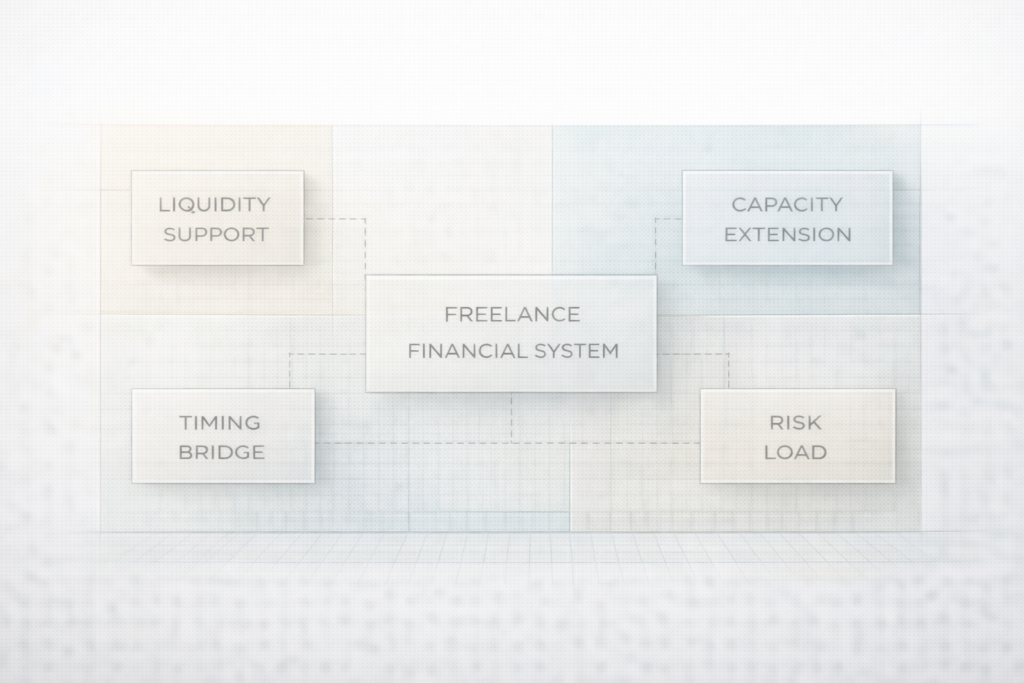
This page defines the interpretive role of Pillar 3 within FM Mastery.
AI-Enhanced Debt & Credit Optimization exists to help freelancers understand what debt and credit are signaling about their financial system — not how to use them, fix them, or improve outcomes.
Within FM Mastery, AI-Enhanced Debt & Credit Optimization is interpreted as a system-level signal framework rather than a set of financial actions.
Debt and credit are interpreted here as system amplifiers. They magnify existing stability or instability; they do not create strength or weakness on their own.
Interpretive Purpose of This Asset (P3-A0)
This authority asset establishes how debt and credit should be read and understood under freelance income conditions.
• No execution logic
• No advice or tactics
• No behavioral correction
• No optimization framing
The objective is interpretive clarity, not action.
What AI-Enhanced Debt & Credit Optimization Means at the System Level
Within Pillar 3, optimization does not mean:
• Paying debt faster
• Using credit more efficiently
• Improving credit scores
• Accessing more or better credit
Structurally, optimization means:
• Debt and credit behave in ways that do not destabilize the income-driven system
• Obligations remain aligned with volatility rather than fighting it
The focus is on system alignment, not improvement.
The Core Signal This Pillar Interprets
The central signal interpreted by Pillar 3 is:
Debt and credit reveal stress before cashflow visibly breaks.
When debt or credit begins to:
• Feel heavier without changing
• Require more attention to maintain
• Limit flexibility indirectly
The system is signaling structural tension, not urgency, failure, or error.
This pillar helps readers recognize the signal without reacting to it.
Why Debt Behaves Differently Under Freelance Income
Under freelance conditions, debt behaves as:
• Income-timing sensitive
• Volatility amplifying
• Dependency exposing
The same debt that feels manageable under stable income can feel oppressive under variable income — not because the debt changed, but because the system context changed.
This explains why freelancers often experience:
• Sudden debt anxiety without new borrowing
• Credit pressure despite steady earnings
• A sense of being “trapped” without increased obligations
These are system responses, not personal shortcomings.
Credit as Capacity, Not Safety
Credit is often misunderstood as safety.
This pillar interprets credit as:
Capacity to absorb shocks — only if the system can support that absorption.
When credit feels reassuring, it usually reflects:
• Predictable income behavior
• Manageable dependency
• Clear system boundaries
When credit feels dangerous, it often signals:
• Income volatility
• Overlapping obligations
• Hidden leverage elsewhere in the system
Credit does not fix instability. It exposes it.
What This Pillar Helps the Reader Understand
This pillar helps readers understand:
• Why debt pressure can increase without new debt
• Why credit limits feel different over time
• Why stress appears before missed payments
• Why debt amplifies income-structure weaknesses
It explicitly does not help readers:
• Decide how to use credit
• Choose repayment paths
• Improve credit metrics
• Reduce balances
Understanding precedes all of those considerations.
Relationship to Income, Stability, and Growth (Without Mixing Pillars)
From the Pillar 3 interpretation lens:
• Income volatility shapes debt stress
• Debt stress feeds back into system fragility
• Credit magnifies existing patterns
This pillar does not manage income (Pillar 2) and does not control cashflow (Pillar 1).
It interprets how obligations behave inside volatility, nothing more.
Boundary Interpretation — Why No Advice Is Given
This pillar deliberately excludes:
• Financial advice
• Behavioral correction
• Tactical optimization
• Product or lender logic
The interpretation here is simple:
Acting on debt or credit signals without understanding them often increases risk.
This pillar exists to slow interpretation, not accelerate decisions.
Interpretation Summary: AI-Enhanced Debt & Credit Optimization
At the interpretation level, AI-Enhanced Debt & Credit Optimization for Freelancers means:
• Debt and credit are stress amplifiers
• Signals appear before breakdown
• Context matters more than amounts
• Understanding must precede action
This pillar trains readers to read obligation pressure as system feedback, not as an instruction to react.
Phase 3 Status — P3-A0
• Interpretation complete
• No execution or advice introduced
• No structural changes made
• Pillar authority preserved
Next Asset (Pending Confirmation):
P3-C1 — Good Debt vs Bad Debt for Freelancers