
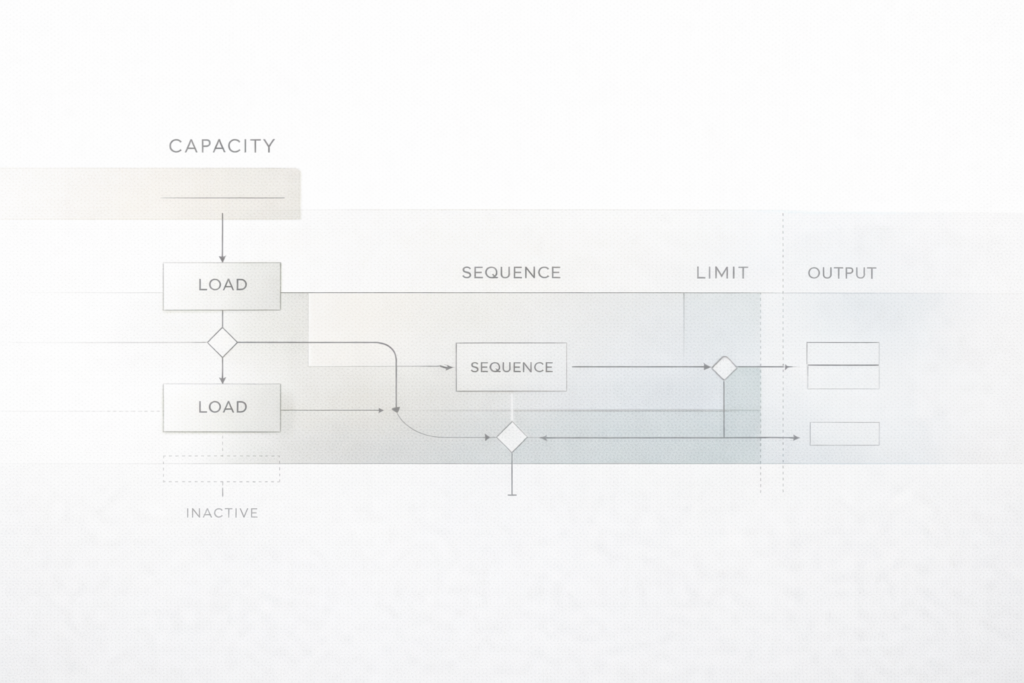
AI-productivity & operations for freelancers focuses on building adaptive systems that help independent professionals manage variable workloads, protect focus, and execute consistently—without burnout.
🟦 Why AI-Powered Productivity & Operations Matter for Freelancers
AI-powered productivity and operations for freelancers address structural execution problems caused by variable income, shifting priorities, and solo business ownership.
AI-powered productivity and operations for freelancers are not about working harder, longer, or squeezing more tasks into the day. Freelancers struggle with productivity because their work environment is structurally unstable. Workload fluctuates, priorities shift rapidly, and income pressure interferes with focus.
Traditional productivity systems assume fixed schedules, predictable roles, and stable routines. Freelancers operate without those assumptions. You are simultaneously the CEO, operator, marketer, accountant, client manager, and delivery team—often switching contexts dozens of times a day.
This category introduces AI-powered productivity and operations systems designed specifically for freelancers. These systems combine automation, intelligent prioritisation, and behavioural safeguards to help you execute consistently, protect focus, and scale without burnout.
The Freelancer Productivity Trap
Freelancers do not experience productivity problems the way employees do. The challenge is not discipline or motivation—it is structural overload.
Structural Pressures Freelancers Face
- Workload fluctuates unpredictably
- Deadlines cluster without warning
- Client communication interrupts deep work
- Administrative tasks quietly expand every week
- Decision fatigue drains energy before revenue work
- Tools accumulate without a coherent workflow
When Productivity Becomes Emotional
Over time, these pressures create a familiar pattern:
You feel busy but not effective
Important work gets postponed
Low-value admin crowds out high-impact tasks
Focus collapses during high-pressure weeks
Burnout develops without clear warning signs
This is the freelancer productivity trap. AI-enabled operations offer a way out—not by adding tools, but by designing systems that adapt to volatility.
🟩 What This Category Helps You Fix
This category is built to replace operational chaos with clarity. You will learn how to design AI-powered operating systems that support sustainable execution under real freelance conditions.
Core Outcomes
- Automate repetitive administrative work and follow-ups
- Design daily workflows that protect deep work
- Reduce decision fatigue using rules, triggers, and constraints
- Use AI assistants to plan, prioritise, and execute calmly
- Build focus systems that adapt to variable energy levels
- Create operational habits that compound over time
These systems are not generic productivity hacks. They are designed specifically for freelancers managing irregular income and shifting demand.
How AI-Driven Operations Support Sustainable Execution
🧭 What You’ll Find in This Category
AI productivity for freelancers is not about replacing thinking—it is about reducing unnecessary cognitive load so thinking can be reserved for high-value work.
Operational Benefits of AI Systems
- Reduced context switching through structured workflows
- Clear prioritisation during volatile weeks
- Automated handling of repetitive and low-leverage tasks
- Predictable execution even when schedules are unstable
- Energy-aware planning that prevents burnout cycles
When operations are stable, productivity stops feeling emotional and starts becoming repeatable.
What You’ll Find in This Category
This category curates practical, systems-level resources for freelancers who want execution without exhaustion.
Included Resources
- AI-powered productivity workflows
- Daily and weekly operating system templates
- Tools to reduce overload and fragmentation
- Focus and habit systems grounded in behavioural science
- AI tool reviews for operations and execution
- Checklists, playbooks, and real-world setups
Whether you feel overwhelmed, inconsistent, or stretched too thin, this category functions as your operational control centre.
Prerequisites for Operational Optimisation
Productivity systems work best when grounded in financial clarity.
If your cash flow is unstable, productivity optimisation often backfires—creating pressure instead of relief. For this reason, FM Mastery introduces operations only after financial stability is established.
If you have not already done so, begin with AI-Powered Money Management for Freelancers to stabilise cash flow. Productivity without financial structure still leads to
How This Category Fits Into the FM Mastery System
This page represents Step 3 — Productivity & Operations within the FM Mastery system.
For freelancers, productivity is not about doing more work. It is about aligning time, energy, and delivery capacity with financial reality. Poor operations silently destabilise cash flow even when income appears strong.
FM Mastery introduces productivity systems only after money stability and debt risk are controlled. This sequencing prevents burnout-driven income drops and reactive financial decisions.
If your finances are not yet stable, return to Step 1 — Money Management before optimising operations.
🚀 Try AI Productivity Tools
You don’t need more hustle.
You need better systems — automated, adaptive, and human-aware.
📚 Related Pillars
📘 AI-Powered Money Management for Freelancers
Stabilize cash flow, reduce stress, and build a financial system that supports consistent execution.
👉 Explore this category →
AI-Smart Income Growth for Freelancers
Scale earnings using pricing psychology, demand signals, and AI-driven revenue systems.
👉 Explore this category →
Operational Templates
FM Mastry productivity systems are implemented using structured SOPs and decision frameworks.
FAQ
Q1 How can freelancers stay productive with irregular workloads?
Freelancers stay productive with irregular workloads by using AI-assisted task prioritization, workload forecasting, and automation systems that adapt daily focus based on real demand.
Why do traditional productivity systems fail freelancers?
Traditional productivity systems fail freelancers because they assume consistent schedules and predictable workloads, while freelancers face volatility that requires adaptive systems.
Can AI really improve freelance operations?
Yes. AI improves freelance operations by automating repetitive tasks, optimizing workflows, and reducing decision fatigue—allowing freelancers to focus on high-value work.
How This Page Fits Into the FM Mastry System
This page represents Step 3 — Productivity & Operations within the FM Mastery system.
For freelancers, productivity is not about doing more work. It is about aligning time, energy, and delivery capacity with financial reality. Poor operations silently destabilise cash flow even when income appears strong.
FM Mastery introduces productivity systems only after money stability and debt risk are controlled. This sequencing prevents burnout-driven income drops and reactive financial decisions.
If your finances are not yet stable, return to Step 1 — Money Management before optimising operations.
🔒 Final Note
You do not need more hustle.
You need systems that are automated, adaptive, and designed for how freelance work actually functions.
This category exists to help you build those systems.
FM Mastery is built on a structured AI-powered financial system for freelancers designed to operate under irregular income and uncertainty.
📚 Latest Guides in Productivity & Operations
Freelancer Finance Today — Thursday, 12 March 2026
Global regulators are accelerating cross-border payment reforms as SWIFT upgrades settlement infrastructure and new tax reporting frameworks reshape how freelancers receive international payments. Global payment
Freelancer Finance Today — Wednesday, 11 March 2026
Daily financial intelligence briefing tracking global payment infrastructure, cross-border settlement rails, and tax reporting systems shaping freelance income flows. Freelancer Finance Today — 11 March
Freelancer Finance Today — Monday, 09 March 2026
Daily financial intelligence briefing tracking global payment infrastructure, cross-border settlement systems, and tax reporting frameworks shaping freelancer income flows. Freelancer Finance Today — 09 March
Freelancer Business Systems
Freelancer Business Systems: Operational Systems for Freelance Stability Operational systems that support financial stability for freelancers and independent professionals. Freelancers operate as independent businesses rather
Freelancer Financial Planning
FM Mastery Financial Intelligence Hub Long-Term Financial Systems for Freelancers with Irregular Income Freelancer financial planning helps independent professionals manage irregular income, plan taxes, build