
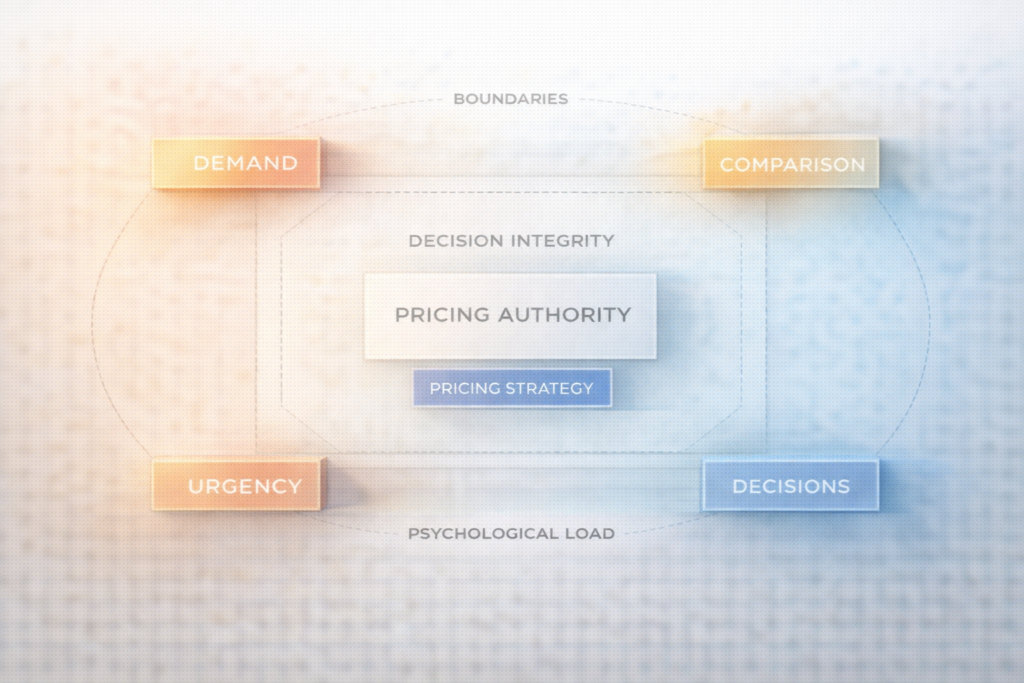
Freelance pricing psychology and strategy explain what pricing pressure reveals about income structure. This page interprets pricing behavior as a structural income signal, not as a confidence issue, persuasion skill, or tactical choice.
Governance Context
• Pillar: AI-Smart Income Growth
• Phase: Phase 3 — Interpretation
• Mode: Meaning, Signals, and Understanding
• Governance State: Fully compliant
No execution steps, scripts, negotiation advice, tools, or pricing actions are introduced on this page.
What Pricing Psychology Means Structurally
Within Pillar 2, pricing psychology does not mean:
• Mindset coaching
• Confidence building
• Scripts or framing
• Negotiation techniques
Structurally, pricing psychology means:
• How income structure shapes which pricing levels are possible or unstable
What a freelancer feels about pricing often mirrors what the income system can currently support.
The Primary Signal This Asset Interprets
The core signal interpreted by pricing psychology is:
Pricing resistance appears when structure and value capture are misaligned.
When freelancers notice:
• Discomfort raising prices
• Inconsistent acceptance of rates
• Sudden pushback after long stability
The system is signaling structural tension, not personal limitation.
This asset helps readers recognize that signal without reacting to it.
Why Pricing Feels Personal (But Is Not)
Pricing often feels emotional because:
• Income concentration increases pressure
• Predictable income narrows margin for error
• Client leverage magnifies consequences
This asset interprets these emotions as system feedback, not internal weakness.
When pricing anxiety rises, it often reflects:
• Over-dependence on specific clients
• Fragile income predictability
• Unresolved income leaks
The emotion is real.
The cause is structural.
Pricing Authority as a Structural Condition
This asset clarifies an important interpretation:
Pricing authority exists only when the income structure can absorb change.
Pricing authority does not come from:
• Experience alone
• Market comparisons
• Personal conviction
It emerges when:
• Income volatility is lower
• Client leverage is understood
• Dependency is reduced
This reframes pricing as an outcome of structure, not an input.
What This Asset Helps the Reader Understand
This asset helps readers understand:
• Why pricing tension rises before instability
• Why price increases sometimes fail without explanation
• Why confidence alone does not change pricing outcomes
• Why pricing signals often appear before income shifts
This asset does not help readers:
• Set rates
• Communicate price changes
• Handle objections
• Decide when to act
Understanding is the sole objective.
Relationship to Leverage and Predictability
Under the pillar authority of AI-Smart Income Growth for Freelancers, pricing pressure reflects deeper income dynamics:
• Client leverage intensifies pricing signals
• Predictable income stabilizes pricing pressure
• Income leaks distort pricing feedback
Pricing becomes the visible edge of deeper income structure.
Boundary Interpretation
The word “strategy” in this asset is interpretive, not tactical.
Here, strategy means:
• How pricing fits within income growth logic
• How pricing reflects system readiness
It does not mean:
• Planning actions
• Choosing tactics
• Timing moves
Holding this boundary preserves the signal this asset exists to explain.
Summary Interpretation
At the interpretation level, Freelance Pricing Psychology & Strategy mean:
• Pricing discomfort is a structural signal
• Authority follows stability, not confidence
• Emotional responses often reflect system limits
• Pricing reveals income readiness before income changes
This asset trains readers to read pricing pressure as information, not as a problem to fix.
Phase 3 Status
• Interpretation complete
• No execution, tactics, or advice introduced
• No structural changes made
• Pillar authority lens preserved