
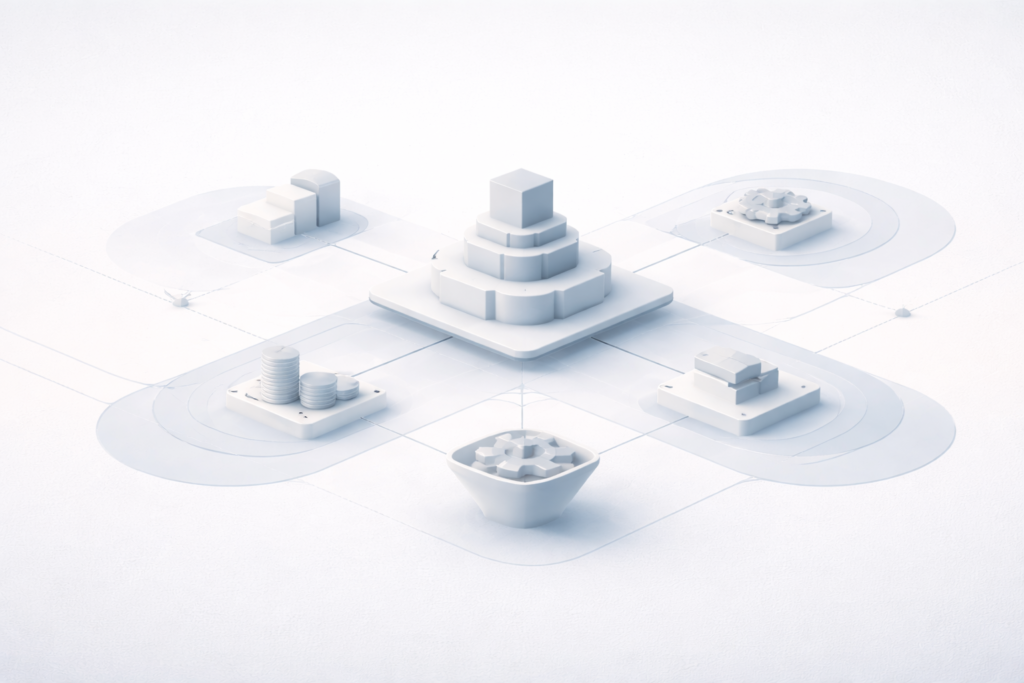
This guide sits within the Freelancer Business Systems (AI-Enabled) pillar at FM Mastry, focused on building durable, low-fragility solo businesses once income, execution, and growth systems are already in place.
System context: This article is part of the Freelancer Business Systems (AI-Enabled) pillar within FM Mastry and represents the final integration layer of the framework.
Quick Answer for Freelancers Struggling With Debt
Freelancers fall into debt not because of overspending, but because irregular income collides with fixed expenses and emotionally reactive decisions. Business systems prevent this by enforcing structure before stress escalates.
Related foundational pillars:
Why Freelancers Break Down After “Success”
Most freelancers experience instability after income improves — not before.
- One late payment creates stress
- One slow month triggers panic
- One opportunity causes overload
Judgment: Income without systems increases fragility rather than security.
The Core Shift: A Business Is Not Effort — It Is System Design
Freelancers are not workers. They are solo enterprises.
- Effort scales poorly
- Memory fails under pressure
- Motivation fluctuates
Judgment: Durability comes from rules, not willpower.
Why Traditional Business Advice Fails Freelancers
Most business frameworks assume teams, predictable cash flow, and delegated execution.
Freelancers operate under:
- Irregular income
- Solo decision-making
- Personal financial exposure
Judgment: Complexity collapses fastest under solo constraints.
The AI-Enabled Freelancer Business OS™
This pillar integrates five layers into a single operating model.
1. Financial Control Layer
Creates cash-flow predictability and safety thresholds.
Failure point: No system survives without financial calm.
2. Revenue & Pricing Layer
Aligns growth with delivery capacity.
Failure point: Reactive pricing creates burnout.
3. Execution & Operations Layer
Converts work into repeatable delivery.
Failure point: Ad-hoc workflows collapse under scale.
4. Decision & Automation Layer
Replaces choices with rules and triggers.
Failure point: Automating chaos amplifies errors.
5. Feedback, Forecasting & Resilience Layer
Detects stress early and adjusts before failure.
Failure point: Ignoring signals until damage appears.
How This Fits Inside FM Mastry
- Step 1: Stability
- Step 2: Risk Control
- Step 3: Execution Capacity
- Step 4: Controlled Growth
- Step 5: Integrated Business Systems
Judgment: Integration only works after earlier layers are stable.
A Psychology-First Framework for Durability
Step 1 — Emotional Inventory
Identify panic, entitlement, and avoidance triggers.
Step 2 — Weekly Visibility
Review money, commitments, and emotional responses weekly.
Step 3 — Micro-Automations
- Small buffer transfers
- Rule-based payments
- Low-friction reminders
Step 4 — Predictable Financial Floor
Define the minimum income required to remain stable.
Judgment: Psychological safety precedes sustainable growth.
Final Takeaway: Durability Is the Real Goal
Freelancers do not fail from lack of ambition. They fail from lack of structure.
A durable business continues working when energy drops, confidence fades, and conditions change.
FM Mastry — Post → Pillar Enforcement Block
This article belongs to the Freelancer Business Systems (AI-Enabled) pillar within FM Mastry.
It represents the final integration layer where money, execution, and growth systems operate as one.
Evidence & Research Foundations
- Pew Research Center (2024) — Income volatility among independent workers
- MIT & Harvard (2023) — Financial scarcity and cognitive load
- Journal of Behavioral Finance (2024) — Gig economy stress patterns
- UK Behavioural Insights Team (2023) — Micro-habits and nudges
- Federal Reserve (2024) — Consumer credit volatility trends