Start Here — Financial Operating System for Freelancers with Irregular Income
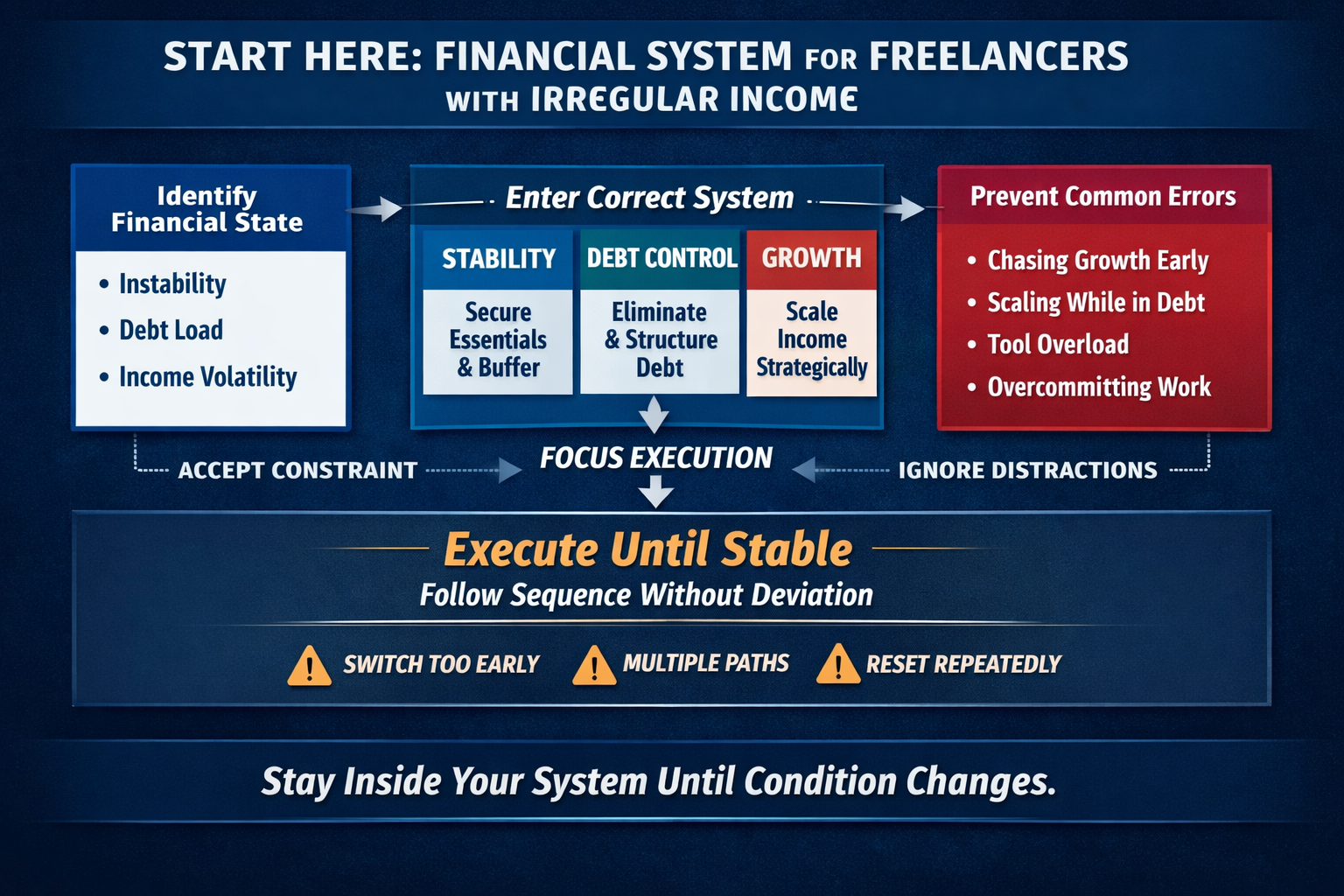
A structured financial decision system designed for freelancers with irregular income, delayed payments, and constant decision pressure.
This financial operating system for freelancers is specifically designed to handle irregular income, unpredictable cashflow, and decision pressure.
Financial clarity is not a talent — it is a system.
Freelancers do not fail because they lack income.
They fail because they lack systems.
Most financial advice assumes stable income and predictable conditions. Freelancers operate under variability, uncertainty, and pressure.
FM Mastery is a financial operating system built for this reality — helping you stabilize cashflow, reduce uncertainty, and make structured financial decisions.
This system is built specifically for freelancers, solopreneurs, and independent professionals navigating income volatility, delayed payments, and financial uncertainty.
Takes less than 2 minutes → Immediate clarity
Page Navigation
- Understanding the System
- The System Map
- How to Use This System
- Identify Your Starting Point
- Financial Decision Engine
- System Identity
- Core System Principle
- The Real Problem
- Decision Engine Logic
- Decision Lock
- Financial States
- State Identification
- State Mapping
- System Routing
- Next Step
- Pillar Systems
- AI Positioning
- System Errors Prevented
- Decision Flow
- Usage Protocol
- Final Execution
Who This Is For
Managing unpredictable income and financial uncertainty
Handling delayed payments and inconsistent cashflow
Operating without fixed income systems
“Freelancers” represents anyone operating without stable income systems.
Start Based on Your Financial Reality
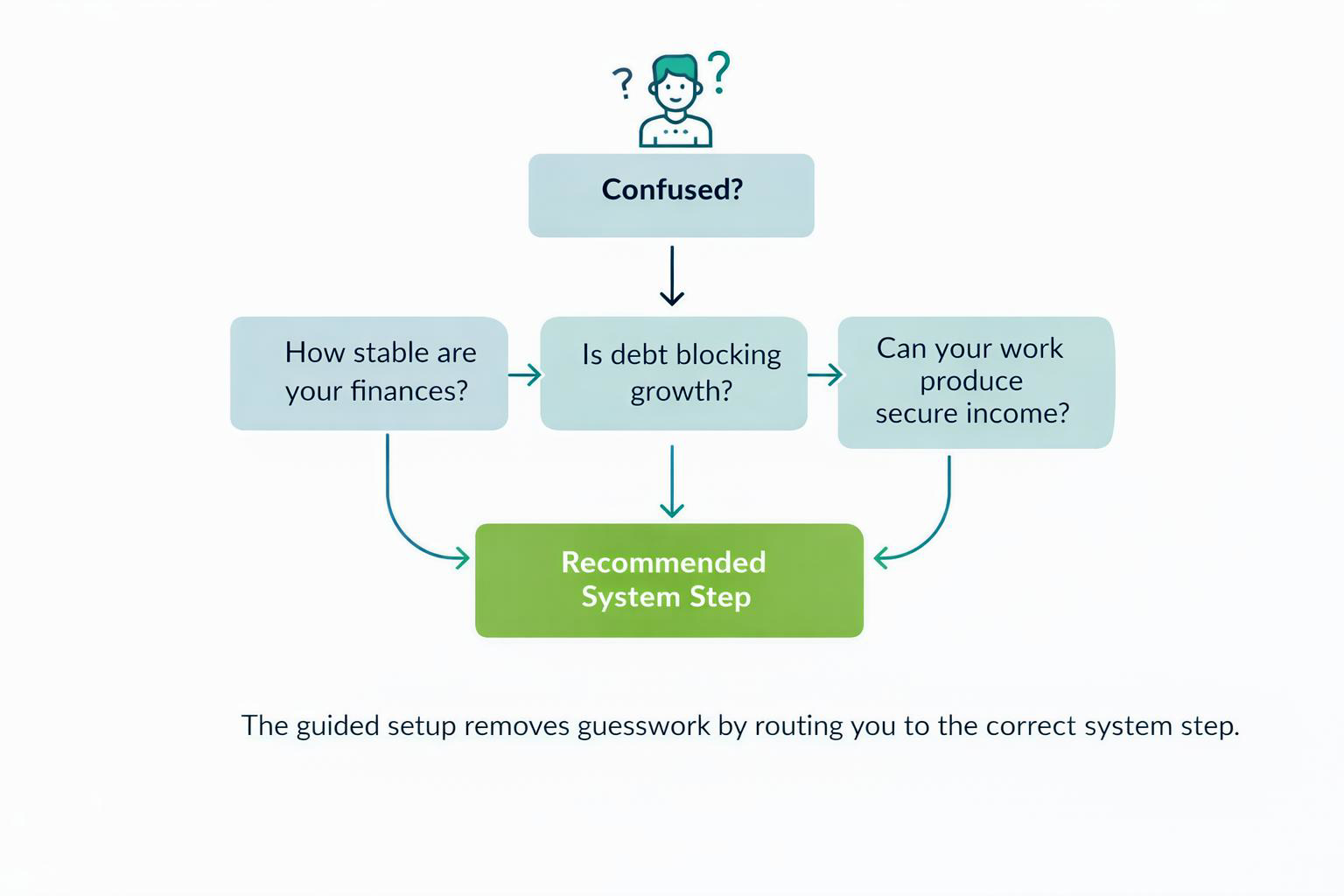
Choose the situation that reflects your current condition. This determines your system.
Income is unpredictable and financial stress affects decisions
Identify State →You earn but lack structured financial systems
Identify State →You want to improve systems without increasing complexity
Identify State →What FM Mastery Is (And Is Not)
Structured financial operating system for irregular income
Decision framework for financial clarity
System-based execution model
Generic budgeting method
Tool collection
Traditional finance blog
Financial problems are solved by applying the right system — not consuming more information.
How the Financial System Works
Determine your financial state
Connect state to correct system
Execute structured solutions
Use tools only for execution
Sequence creates stability. Skipping steps creates failure.
The System Map
Stability
Risk Control
Execution
Scaling
Integration
Each system builds on the previous — sequence matters more than speed.
Each layer of this financial system for freelancers is designed to solve a specific constraint caused by irregular income.
How to Use This System
Replace reactive decisions with structured workflows.
Systems replace decision fatigue.
Using a structured financial system for freelancers ensures that decisions remain consistent even when income fluctuates.
Explore execution tools → AI Tools for Freelancers or start with curated systems → Best AI Tools for Freelancers
Identify Your Starting Point
Before applying any system, you must identify your financial state.
Your next step is determined by your condition — not your goals.
The section below is the decision engine of this system. It determines your financial state and routes you into the correct system.
Do not choose manually. Let the system determine your path.
Financial Decision Engine for Freelancers with Irregular Income
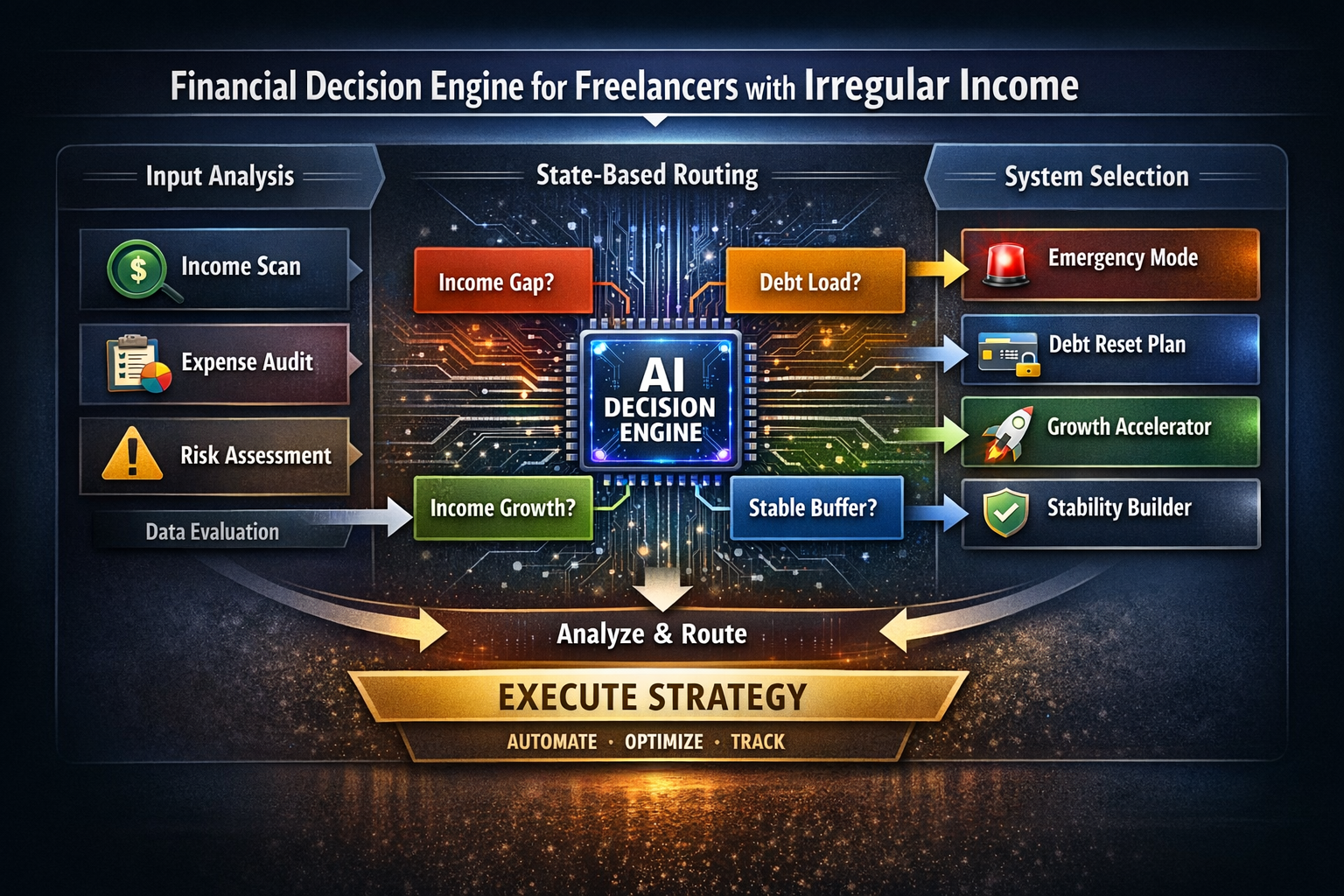
A structured financial decision system designed to help freelancers operate under income volatility with clarity, control, and consistency.
This decision engine identifies your current financial state and routes you into the only system that will work under your conditions — eliminating guesswork, reducing decision fatigue, and preventing costly mistakes.
Identify your state → Enter the correct system → Execute without deviation
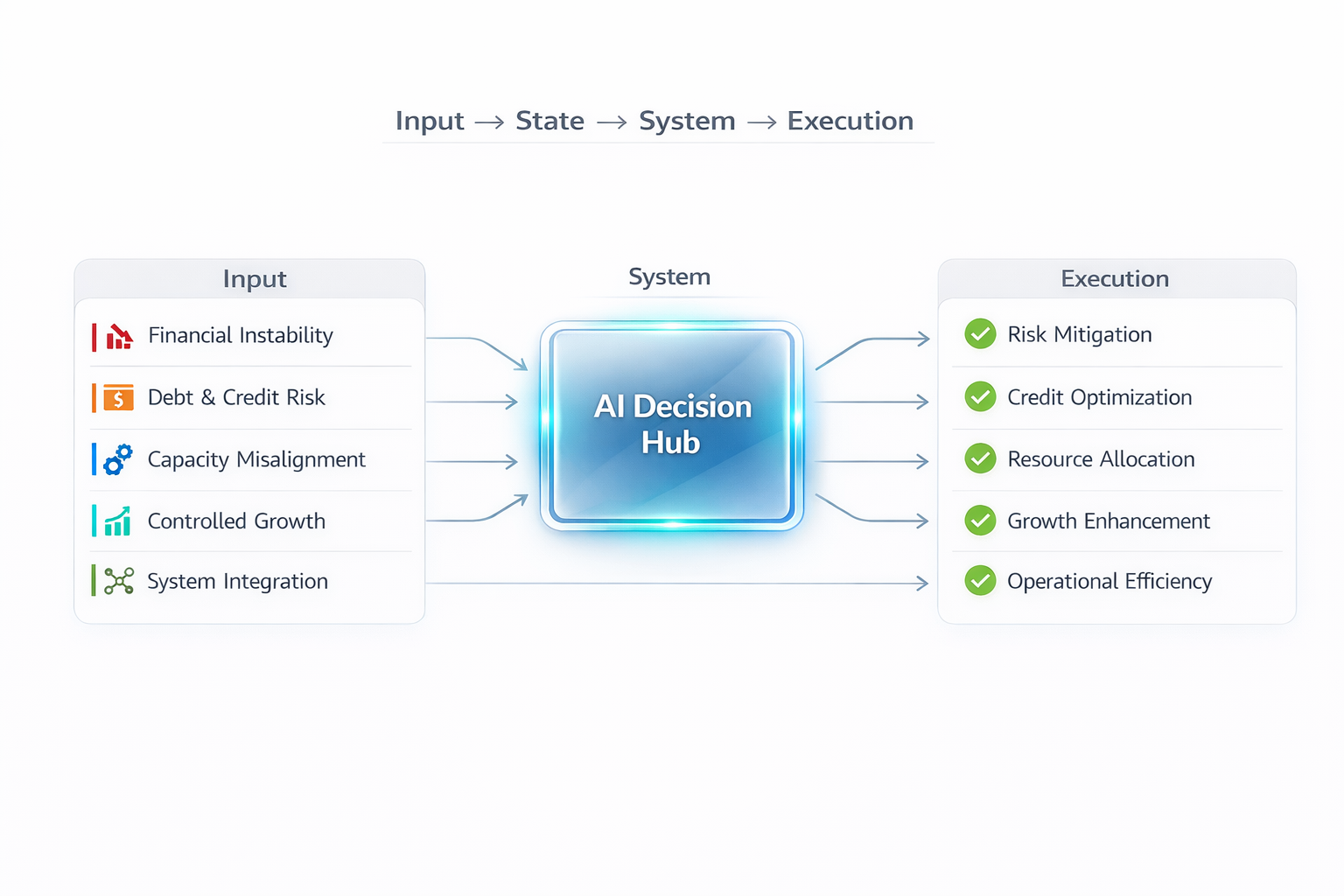
System Entry Control
This section functions as the decision layer of the FM Mastery financial operating system.
FM Mastery organizes freelancer finance into a structured system designed specifically for irregular income, delayed payments, and decision pressure.
The decision engine is the control layer of the financial system for freelancers, ensuring correct system selection under uncertainty.
This system connects financial stability, risk management, operational execution, income growth, and business integration into a unified decision framework.
Instead of navigating multiple strategies, tools, or advice sources, the Decision Engine identifies the one system that matters most right now.
FM Mastery follows a structured decision workflow:
Understand financial challenges under income volatility
Learn the system required to solve the problem
Use the Decision Engine to identify the correct system
Explore authority hubs and structured guides
Execute using tools, workflows, and system constraints
This workflow ensures decisions are made with clarity instead of reaction, and execution follows a structured path rather than scattered effort.
If you are unsure where to begin, start by identifying your current financial pressure.
The Decision Engine will route you to the correct system based on your condition, ensuring that every action aligns with the structure required for stability.
The FM Mastery system operates through a structured decision flow:
Decision Engine → Pillars → Authority Hubs → Cluster Guides → Tools
This structure ensures financial decisions move from understanding to execution in a controlled, repeatable, and scalable sequence.
For a complete system overview → View Financial System Map
System Identity (Non-Negotiable)
This is not financial advice.
This is not a learning resource.
This is not a tool directory.
This is a financial decision control system for freelancers with irregular income.
Your current financial operating state with precision
Incorrect next steps before action begins
You into the only system that works under current conditions
System alignment before any execution begins
This system removes guesswork by replacing reactive decisions with structured execution logic.
This approach aligns with broader financial planning principles around income variability and risk management. For example, guidance from financial planning for self-employed professionals highlights the importance of structured systems under unpredictable income conditions.
Core System Principle
This system is designed specifically for income volatility and financial uncertainty.
It does not remove uncertainty. It structures decisions within it — so outcomes remain stable even when conditions are not.
Freelancers fail when they apply the wrong system at the wrong time.
Correct system selection matters more than effort, discipline, or tools.
The Real Problem (System Failure)
Most freelancer financial problems appear different on the surface — but they originate from the same structural issue.
These are not productivity issues or income problems.
They are decision sequencing failures — caused by applying the wrong system under the wrong conditions.
Decision Engine Logic
This is the core decision framework that governs every system inside FM Mastery.
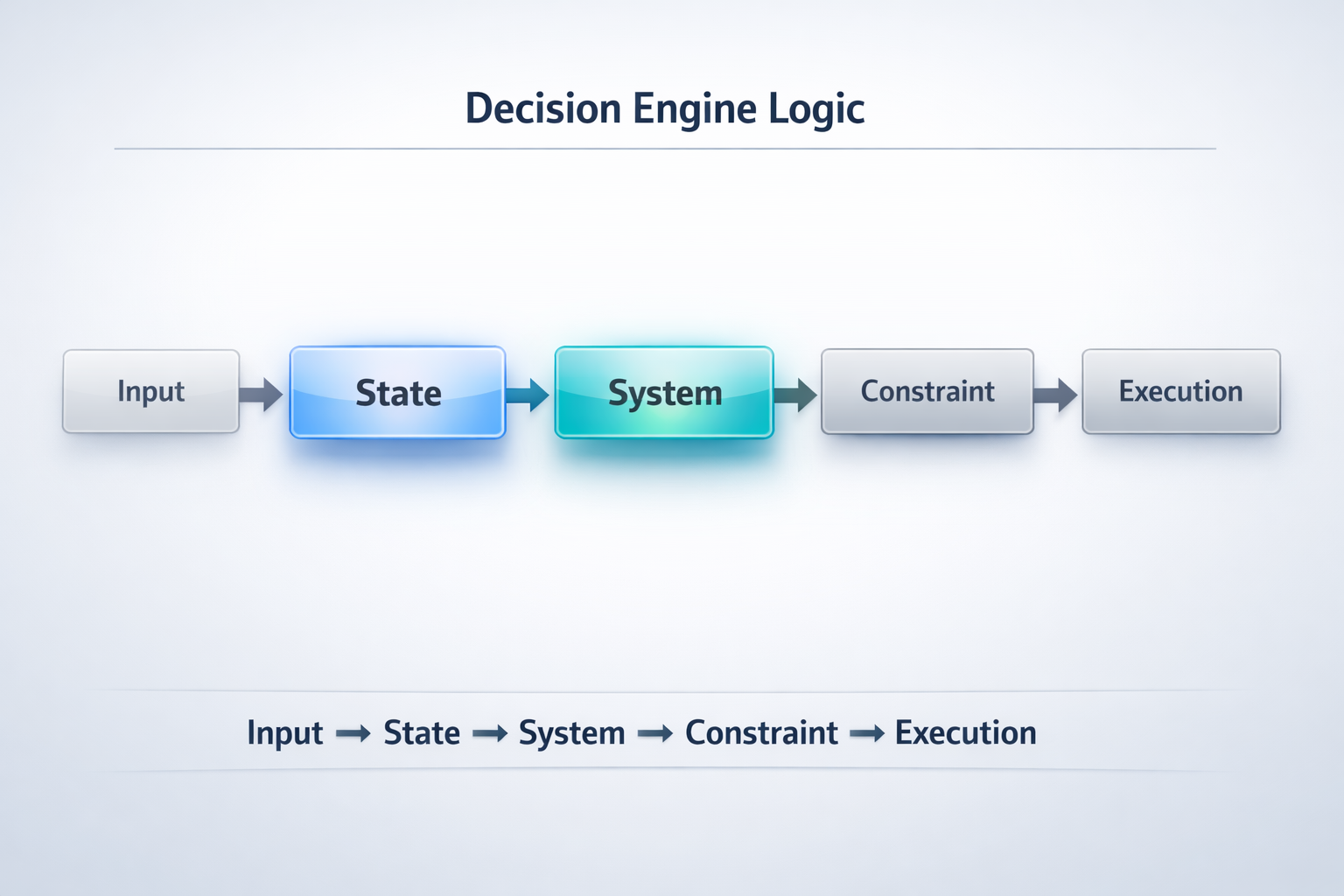
Input → State → System → Constraint → Execution
Your current financial reality
Your dominant operating condition
The correct financial system
What must be avoided
Your next valid action
Failure occurs when the state is misidentified or when constraints are ignored.
Decision Lock
You cannot proceed effectively without committing to a single system.
All of these lead to system failure.
This page enforces one decision — because clarity requires constraint.
Financial States
You are operating within one dominant financial state at any given time.
This is not a mix, transition, or preference-based choice. It is a structural condition that determines which decisions will succeed and which will fail.
Select the state that most accurately reflects your current financial reality.
Accuracy here determines system success. Misidentification leads to incorrect system entry and unstable outcomes.
State 5 — System Integration
Multiple systems exist, but they are not integrated into a unified operating structure.
- Disconnected financial and workflow systems
- Continuous manual decision-making
- No unified control structure
- Complexity without efficiency gains
Failure if misidentified: You continue adding tools or automations instead of integrating systems, increasing complexity and reducing clarity.
Contrast: This is not a growth or productivity issue. It is a system integration constraint.
State Identification
This step determines your current financial operating state. Accuracy is critical because system selection depends entirely on correct identification.
Misidentification leads to incorrect system entry, instability, wasted effort, and repeated resets.
Answer based on your current reality — not goals, intentions, or future plans.
Do income gaps create immediate pressure or urgency?
Does debt affect your decisions or work choices?
Is your workload stable or unpredictable?
Does more work increase stress instead of stability?
Do your systems require constant manual input?
Interpretation Rule:
Identify the first condition that consistently breaks your system. Do not select based on urgency or perceived importance.
Conflict Resolution:
If multiple conditions apply, select the earliest state. Earlier constraints override all higher-level systems.
What Not to Do:
This is a structural diagnosis — not a preference-based decision.
State Mapping
This step converts your financial condition into a system decision.
Mapping is not a recommendation — it is a constraint that determines the only system that will produce stable results.
Selecting incorrectly leads to ineffective action, delayed progress, and repeated instability cycles.
Core Rule:
Always select the earliest valid state. Earlier systems define the constraints for all others.
Why this matters:
Financial systems are sequential dependencies. Instability affects debt, debt affects capacity, capacity affects growth, and growth affects integration.
Instability → Stabilize income visibility first
Risk → Control debt before growth
Capacity → Align execution before scaling
Growth → Structure scaling before expansion
Integration → Unify systems for efficiency
Failure outcomes if incorrect:
Mapping defines your constraint. Your constraint defines your system.
System Routing
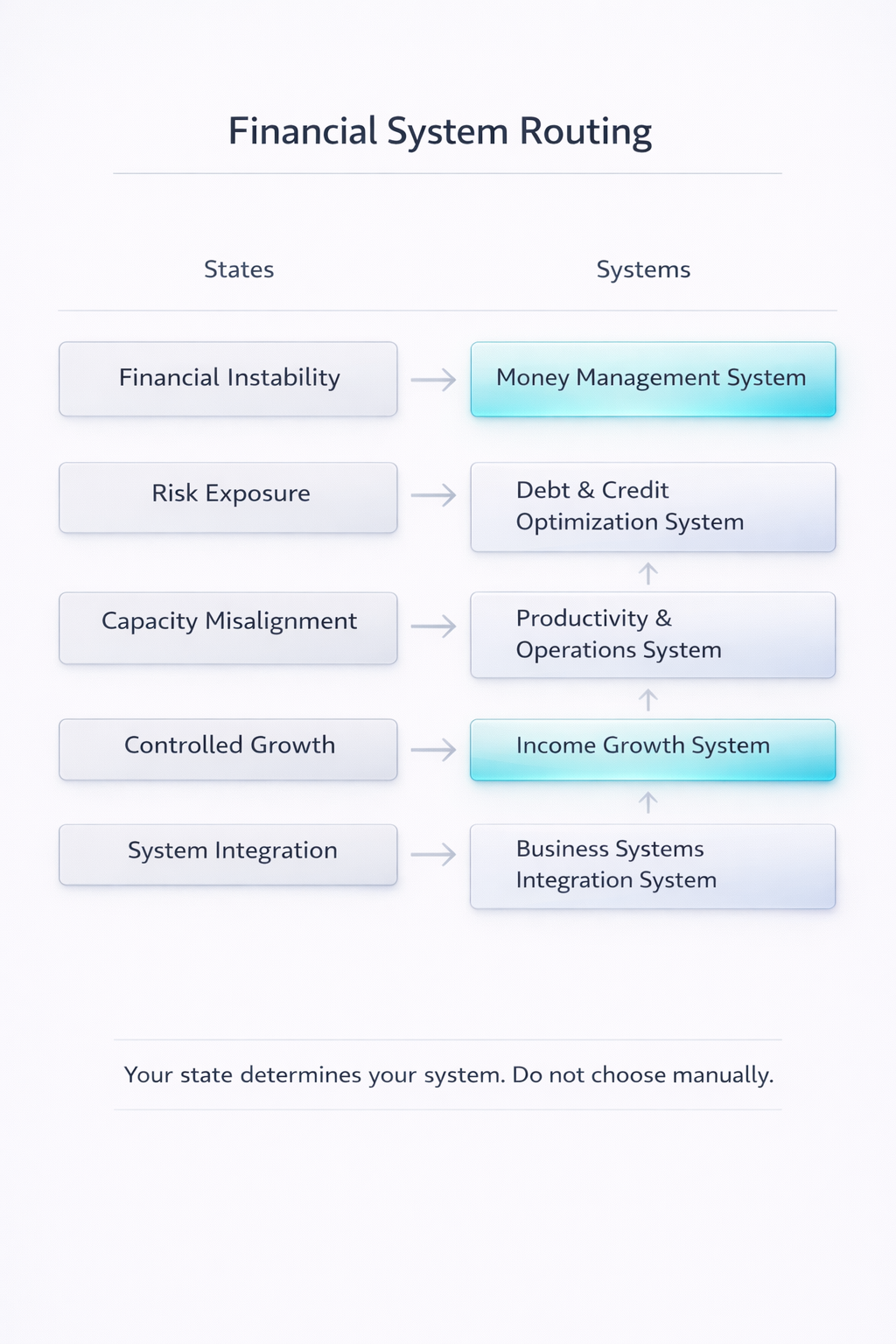
Your financial state directly determines the only system that will produce stable results.
Routing Principle:
You do not choose a system manually. Your financial state determines the correct system.
Misrouting leads to wasted effort, instability, and repeated resets.
This mapping ensures every action aligns with the correct financial system under your current condition.
Next Step
This is the execution point of the decision engine. No further analysis is required.
Move directly into your system and begin execution.
Why this matters:
Financial systems produce results only when applied with focus. Splitting attention creates conflict and prevents progress.
Failure pattern:
Execution rule:
Operate inside one system only until stability is achieved.
Do not prepare for the next system. Do not partially implement multiple systems.
What NOT to do:
This step converts clarity into action. Without execution, identification has no impact.
Pillar Systems (With Constraints)
Each pillar represents a complete financial system designed to solve a specific class of problems under income volatility.
These systems are sequential, not interchangeable. Entering the wrong system leads to failure.
Stability system for cashflow visibility
Risk control system for financial pressure
Capacity alignment system
Controlled scaling system
Integration and automation system
AI-Powered Money Management (Stability System)
Purpose: Stabilize cashflow and create financial visibility under irregular income conditions.
This system fixes:
- Unpredictable income visibility
- Reactive financial decision-making
- Stress caused by financial uncertainty
This system does NOT fix:
- Income growth limitations
- Pricing or client acquisition issues
- Operational execution problems
What happens if skipped:
Any attempt to grow income or optimize productivity collapses under instability. Financial gains remain inconsistent and unreliable.
Constraint:
You are NOT allowed to focus on growth, scaling, or optimization. Your only objective is stability.
AI-Enhanced Debt & Credit Optimization (Risk System)
Purpose: Contain financial pressure and prevent debt from amplifying income volatility.
This system fixes:
- Unstructured or reactive debt repayment
- Dependence on credit during income gaps
- Financial pressure influencing decisions
This system does NOT fix:
- Cashflow instability without visibility
- Work inconsistency or burnout cycles
- Growth limitations
What happens if skipped:
Increased income is absorbed by debt obligations, preventing real financial progress.
Constraint:
You are NOT allowed to scale income aggressively or expand workload while debt remains uncontrolled.
AI Productivity & Operations (Capacity System)
Purpose: Align time, energy, and execution systems with consistent income generation.
This system fixes:
- Inconsistent work output
- Burnout cycles and overwork patterns
- Mismatch between effort and financial outcomes
This system does NOT fix:
- Debt-related financial pressure
- Cashflow instability without financial visibility
- Pricing or growth strategy issues
What happens if skipped:
Increased effort produces unstable results. Workload becomes inconsistent and income remains unpredictable.
Constraint:
You are NOT allowed to rely on tools, automation, or increased workload without fixing execution structure first.
AI-Smart Income Growth (Growth System)
Purpose: Scale income in a controlled and sustainable way without reintroducing instability.
This system fixes:
- Unstructured income scaling
- Pricing inconsistency
- Growth that increases stress and instability
This system does NOT fix:
- Cashflow instability
- Debt-related constraints
- Execution inconsistency
What happens if skipped or entered too early:
Growth amplifies instability. Increased workload leads to burnout and unsustainable income patterns.
Constraint:
You are NOT allowed to scale beyond what your current systems can support.
Freelancer Business Systems (Integration System)
Purpose: Integrate all systems into a unified operating structure that reduces manual decision-making and improves consistency.
This system fixes:
- Disconnected financial and operational systems
- High decision fatigue
- Manual, effort-driven processes
This system does NOT fix:
- Income instability
- Debt-related financial pressure
- Work inconsistency
What happens if skipped:
Systems remain fragmented. Complexity increases without improving efficiency or clarity.
Constraint:
You are NOT allowed to introduce new tools or systems without integrating existing ones first.
AI Positioning
AI operates within this financial system as a visibility and execution support layer.
It improves clarity, reduces friction, and enhances consistency — but it does not determine decisions or replace system logic.
The system remains primary. AI remains supportive.
System Errors Prevented
This decision system exists to prevent predictable financial errors that freelancers make under pressure, uncertainty, or incomplete information.
These errors are not random. They are the direct result of operating without correct system alignment.
Starting with Growth Before Stability
Why this happens: Growth feels like progress, especially under income volatility. Increasing work appears to solve financial pressure.
What it causes: Instability increases. More income introduces more variability, and financial stress continues despite higher effort.
Why it repeats: Temporary income spikes create the illusion of progress, but without stability, results do not hold.
Scaling While Debt Exists
Why this happens: Freelancers attempt to out-earn debt instead of structuring it. Income is treated as the primary solution.
What it causes: Increased earnings are absorbed by repayments, reducing real financial progress and increasing pressure.
Why it repeats: Debt remains reactive, and each income increase is redirected instead of retained.
Using Tools Without Systems
Why this happens: Tools create a sense of control and productivity without requiring structural change.
What it causes: Complexity increases. More tools create more decisions, more friction, and less clarity.
Why it repeats: Tools provide short-term efficiency gains but do not resolve underlying system problems.
Overcommitting Under Pressure
Why this happens: Income uncertainty leads to accepting all available work, regardless of fit or capacity.
What it causes: Burnout, reduced quality, client dissatisfaction, and unstable long-term income.
Why it repeats: Short-term urgency overrides system thinking, reinforcing reactive behavior.
Switching Systems Prematurely
Why this happens: Lack of immediate results leads to abandoning systems before they stabilize.
What it causes: No system reaches completion. Progress resets repeatedly, preventing compounding results.
Why it repeats: Without understanding sequence dependency, each new approach appears as a new solution.
Core Insight:
These errors are prevented by applying the correct financial system at the correct time and following the sequence without deviation.
Decision Flow
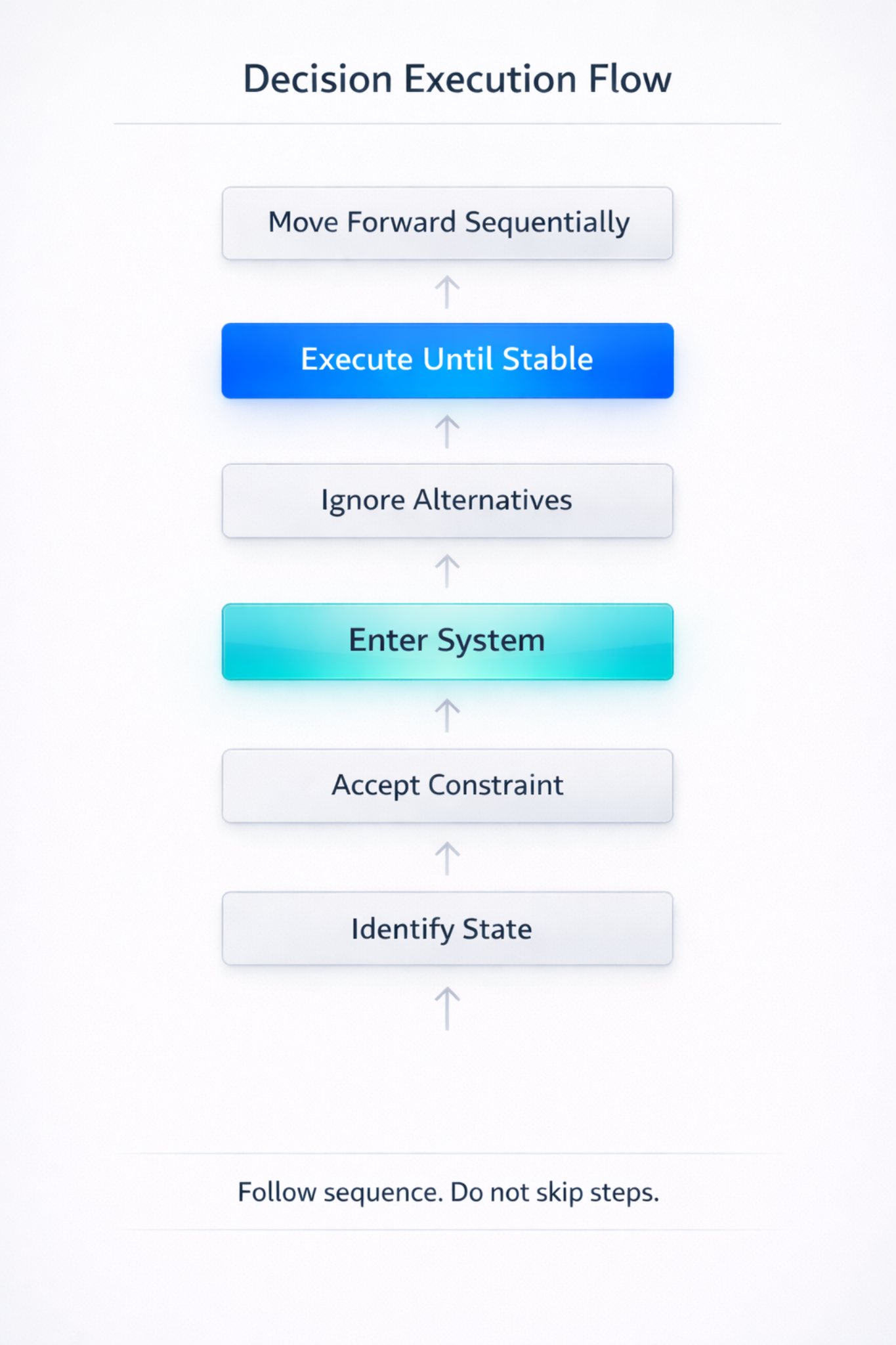
This is the complete execution path of the financial operating system for freelancers. Each step builds on the previous one.
Skipping, reordering, or partially applying steps breaks system integrity and prevents results from compounding.
-
Identify your state
This defines your current constraint. Accuracy is critical. -
Accept the constraint
Removes unnecessary decisions and prevents premature optimization. -
Enter one system
Focused execution inside a single pillar system. -
Ignore all others
Prevents confusion and weak execution. -
Execute until stable
Stability requires repeatable outcomes. -
Move forward sequentially
Enables compounding financial control.
Execution Principle: Progress is created by following the correct sequence with consistency.
Usage Protocol
This system must be used with discipline and constraint to produce results.
- Use only for decision routing
- Stop reading once the correct system is identified
- Do not explore multiple paths simultaneously
- Return only when your financial condition changes
Overuse or deviation reduces effectiveness and reintroduces decision fatigue.
Final Execution
You do not need more information. You need correct financial system alignment.
Step 1: Identify your financial state
Step 2: Enter the correct system
Step 3: Commit fully without deviation
Final Principle
Freelancers fail when they apply the wrong system at the wrong time.
This system removes that risk. From this point forward, only execution remains.
Return only when your condition changes. Until then, stay inside your system and execute.
A financial system for freelancers only works when applied consistently without deviation from sequence.