
AI Client Acquisition Tools for Freelancers (2026) — Get Clients Faster with AI Systems
Most freelancers struggle to get consistent clients — not because of lack of demand, but because acquisition is not systemized.
Manual outreach creates unpredictable results:
- Inconsistent lead flow
- Low response rates
- Income volatility
This guide explains how AI client acquisition tools help freelancers build predictable client pipelines using structured systems, automation, and data-driven workflows.
What You’ll Learn
- How freelancers use AI to build consistent client pipelines
- Best AI client acquisition tools and how they work together
- Step-by-step system to generate leads and convert clients
- How to scale acquisition without increasing manual effort
AI Client Acquisition Tools for Freelancers — Overview & System Breakdown
AI client acquisition tools for freelancers are not standalone tools—they are system components that transform client acquisition from an unpredictable, effort-driven activity into a structured, continuously operating pipeline.
The best AI client acquisition tools for freelancers combine lead generation, outreach, automation, and optimization into a single system that runs continuously.
Freelancers operate in inherently unstable demand environments. Work arrives in cycles—periods of overload followed by periods of scarcity. Most freelancers attempt to compensate by increasing effort: sending more messages, applying to more jobs, or lowering pricing to attract demand. These actions fail because they do not address the core structural issue: acquisition is not systemized.
AI introduces a fundamental shift in how acquisition operates.
Instead of treating acquisition as an event—something triggered only when work is needed—AI enables freelancers to build persistent acquisition systems that operate continuously, independent of time availability or motivation.
Within the broader ecosystem of:
→ AI Tools Hub
→ Best AI Tools for Freelancers
→ AI Productivity Tools for Freelancers
→ AI Automation Tools
→ AI Finance Tools
AI client acquisition tools function as the acquisition layer—the stage where visibility transforms into opportunity, and opportunity converts into revenue.
These tools are often categorized individually as:
• AI lead generation tools
• AI prospecting tools
• AI outreach tools
• AI cold email tools
• AI sales pipeline tools
However, in practice, they do not operate independently. They form an integrated acquisition system where each component supports and amplifies the others.
This system integrates directly with:
• AI productivity tools → execution layer (task completion and throughput)
• AI automation tools → continuity layer (follow-ups, workflows, consistency)
• AI finance tools → measurement layer (conversion tracking, income predictability)
• AI prompts for freelancers → control layer (messaging logic, tone, positioning, personalization)
AI Overview Answer:
AI client acquisition tools are system-driven workflows that continuously identify, engage, and convert clients using AI lead generation, structured outreach, prompt engineering, and automated feedback loops to create predictable client pipelines.
Real-World Scenario:
A freelance developer spends hours manually searching job boards, sending proposals, and waiting for responses. Results are inconsistent—some weeks generate multiple leads, while others produce none.
After implementing an AI-driven acquisition system:
• leads are identified using hiring, funding, and growth signals
• outreach is generated using structured AI prompt templates
• follow-ups are triggered automatically through workflow systems
• responses are tracked and optimized through feedback loops
The result is not simply increased outreach volume—it is the creation of a predictable acquisition pipeline that operates continuously.
System Insight: Client acquisition becomes predictable only when it is embedded into structured, repeatable system logic.
Manual vs System Contrast:
Manual acquisition:
• reactive execution
• inconsistent outreach timing
• dependent on motivation and availability
• no feedback accumulation
System-driven acquisition:
• continuous pipeline operation
• structured workflows and sequencing
• independent of motivation
• feedback-driven optimization
Advanced Layer Insight: As systems mature, acquisition evolves into multi-channel pipelines where email outreach, LinkedIn messaging, inbound signals, and referral triggers operate simultaneously, increasing both acquisition volume and conversion reliability.
Final Doctrine:
Acquisition is not effort—it is system architecture.
What Are AI Client Acquisition Tools
AI client acquisition tools are not standalone applications—they are structured systems that manage the complete lifecycle of acquiring clients. These systems transform fragmented outreach activities into a continuous, repeatable acquisition engine.
Within the broader ecosystem of AI tools for freelancers and best AI tools for freelancers, client acquisition tools operate as a closed-loop system that integrates AI lead generation, AI outreach tools, conversion systems, and optimization workflows into a unified operating model.
These tools are often described as:
• AI lead generation tools
• AI prospecting tools
• AI outreach tools
• AI cold email tools
• AI sales pipeline tools
However, this categorization is misleading when viewed in isolation. In practice, these tools function as interconnected layers within a single acquisition system, where each layer influences the effectiveness of the others.
The system operates as a continuous loop:
Input → Intelligence → Communication → Conversion → Feedback → Optimization
1. Input Layer — Target Definition
This stage defines who the system is built to acquire. It includes industry focus, company size, growth stage, and specific pain signals. Poor input leads to inefficiency regardless of tool sophistication.
System Insight: Output quality is constrained by input precision.
2. Intelligence Layer — Lead Qualification
AI processes structured and unstructured data to identify high-probability prospects using signals such as hiring activity, funding events, product launches, and growth indicators.
Instead of manual prospecting, freelancers operate on signal-based targeting where outreach is directed toward prospects with demonstrated intent.
System Insight: Intelligence replaces guesswork with probability.
3. Communication Layer — Outreach Generation
AI generates personalized communication including cold emails, LinkedIn messages, and proposals. This layer is governed by AI prompts for freelancers and structured prompt engineering frameworks.
These frameworks define:
• message structure
• tone and positioning
• personalization variables
• conversion intent
System Insight: Messaging quality is controlled by prompts, not AI alone.
4. Conversion Layer — Opportunity Creation
This stage converts engagement into calls, proposals, and revenue. It depends on alignment between targeting, messaging, and offer clarity.
High engagement without structured conversion pathways results in lost opportunities.
System Insight: Engagement without conversion creates system leakage.
5. Feedback Layer — Performance Tracking
The system measures performance through metrics such as open rates, reply rates, conversion rates, and objection patterns.
This transforms acquisition into a measurable process.
System Insight: Measurement enables optimization.
6. Optimization Layer — Continuous Improvement
Based on feedback, the system refines targeting, messaging, timing, and channel selection.
This layer increases efficiency and reduces wasted effort through iteration.
System Insight: Optimization improves system efficiency.
AI Overview Answer:
AI client acquisition tools are system-driven workflows that automate how freelancers identify, engage, and convert clients using AI lead generation, structured outreach, prompt engineering, and optimization loops.
Real-World Scenario:
A freelance copywriter initially targets “startups” broadly and sends generic outreach messages. Response rates are low and inconsistent.
After implementing an AI-driven acquisition system:
• identifies startups with recent funding signals (high intent)
• extracts decision-maker data automatically
• generates personalized outreach referencing growth stage and needs
• tracks responses and adjusts messaging based on performance
The system progressively refines targeting and messaging without increasing effort.
The outcome is not more outreach—it is higher-quality acquisition with predictable results.
Manual vs System Contrast:
Manual acquisition:
• broad, undefined targeting
• repetitive message writing
• inconsistent execution
• no structured tracking
System-driven acquisition:
• signal-based targeting
• scalable AI-generated communication
• structured workflows
• continuous performance tracking
Failure Condition (Critical):
If the input layer is incorrect—wrong audience, weak signals, or undefined positioning—the system amplifies inefficiency at scale, resulting in high activity with low conversion.
Advanced System Insight:
As systems mature, they evolve into segmented acquisition engines where different audiences receive tailored messaging across multiple channels.
Doctrine:
Systems learn. Manual effort repeats.
Freelancer Client Acquisition Challenge
Freelancers do not struggle with client acquisition because opportunities are scarce. They struggle because acquisition is not structured as a system.
Within the broader ecosystem of AI tools for freelancers and best AI tools for freelancers, the core limitation is not demand—it is the absence of system-driven acquisition using AI lead generation, AI outreach tools, and structured workflows.
Most freelancers operate in a fragmented, reactive model where acquisition is treated as a secondary activity rather than a core operating function. This creates instability, inefficiency, and income unpredictability.
AI Overview Insight:
Freelancer acquisition problems are structural, not effort-based. AI tools enable structured, continuous acquisition pipelines that remove dependence on inconsistent execution.
Structural Challenges:
1. Time Fragmentation
Freelancers divide attention between delivery, operations, and acquisition. Because income is tied to delivery, acquisition is often deprioritized, creating pipeline gaps.
2. Reactive Execution Model
Acquisition begins when work slows down and stops when workload increases. This creates delayed income cycles and inconsistent pipelines.
3. Weak Targeting
Broad targeting such as “startups” or “businesses” reduces relevance and conversion. Without signal-based targeting, outreach becomes inefficient.
4. Cognitive Overload
Manual acquisition requires researching leads, writing messages, tracking responses, and managing follow-ups, leading to inconsistency over time.
5. Emotional Volatility
Rejection reduces motivation, causing incomplete outreach cycles and irregular execution.
Real-World Scenario:
A freelance designer completes a project and has no upcoming work. They begin outreach manually—searching LinkedIn, sending generic messages, and inconsistently following up.
Results are unpredictable. Some responses appear, but conversion remains low. Over time, outreach slows down as motivation declines.
The conclusion is often that “clients are hard to find.”
In reality, the issue is not demand—it is the absence of structured acquisition execution.
System Insight: The core problem in freelancer acquisition is execution inconsistency caused by lack of structured workflows.
Manual vs System Contrast:
Manual acquisition:
• reactive execution
• inconsistent timing
• dependent on motivation
• no structured tracking
System-driven acquisition:
• continuous execution
• consistent outreach flow
• rule-based processes
• structured tracking
Failure States:
• undefined targeting
• generic messaging
• inconsistent outreach
• no follow-up system
• no feedback integration
These failures originate from missing structure rather than tool limitations.
Advanced Constraint Insight: As freelancers grow, acquisition complexity increases across segments, offers, and channels. Without structured systems, this complexity creates breakdown. With systems, it becomes manageable and scalable.
Doctrine:
Inconsistent acquisition creates inconsistent income.
Client Acquisition System Model
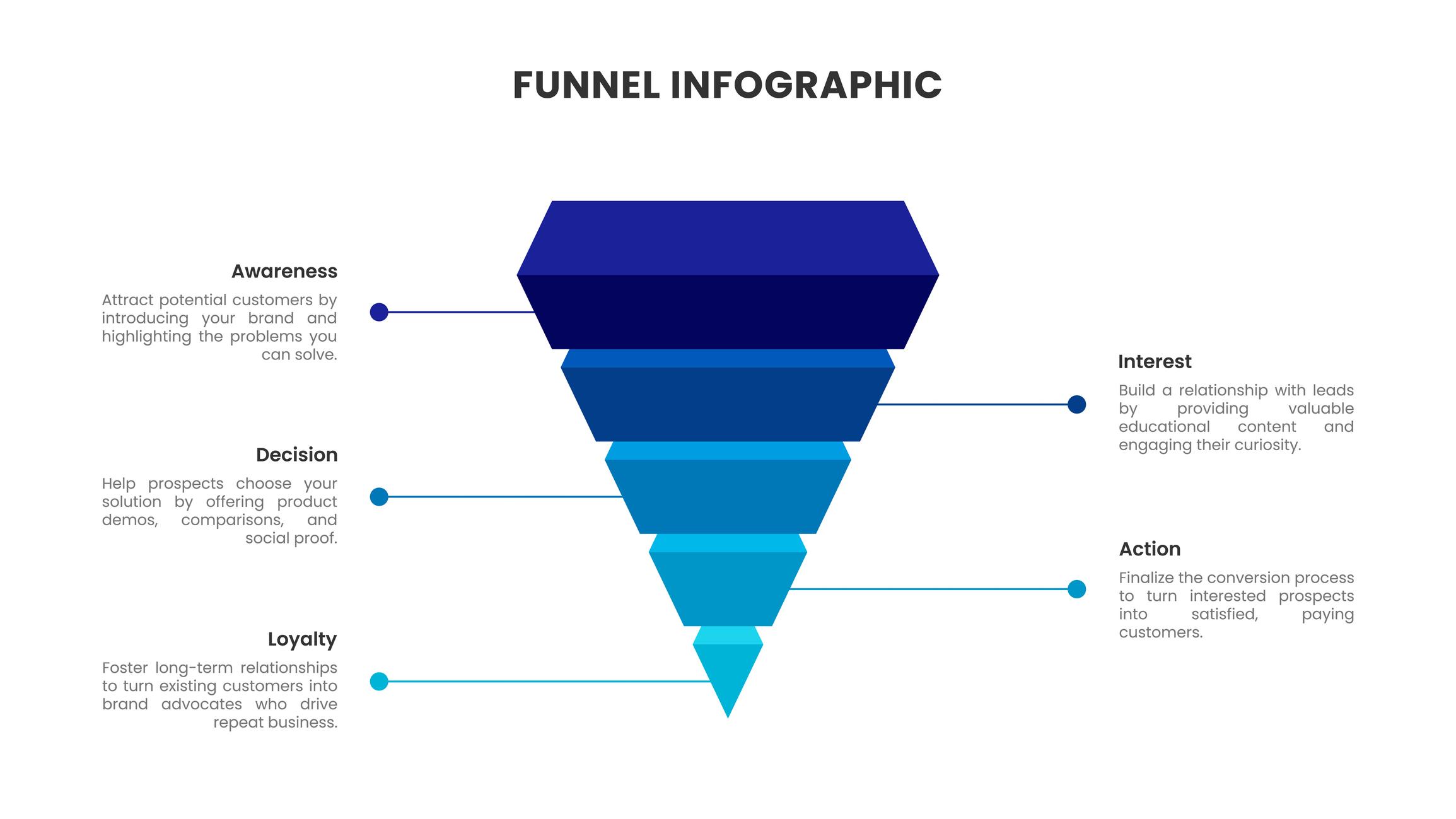
The AI client acquisition system is not a sequence of isolated actions—it is a structured, closed-loop operating system that continuously processes inputs, executes workflows, captures feedback, and improves performance.
Within the broader ecosystem of AI tools for freelancers and best AI tools for freelancers, this model integrates AI lead generation, AI outreach automation, AI prompts for freelancers, and pipeline systems into a unified acquisition engine.
This system operates as a continuous loop:
Input → Research → Outreach → Conversion → Feedback → Optimization → (repeat)
AI Overview Answer:
AI client acquisition systems are closed-loop frameworks that continuously generate, convert, and refine client opportunities using structured workflows, AI-driven targeting, prompt-controlled messaging, and feedback-based iteration.
System Architecture (Core Principle)
The acquisition system functions as an operating system where each layer is interdependent. Weakness in one layer reduces the effectiveness of the entire system.
System Insight: Performance is constrained by the weakest system layer.
Stage-by-Stage Breakdown
1. Input — Target Definition (System Foundation)
This stage defines who the system is designed to acquire.
• industry selection
• company size
• growth stage
• intent signals (hiring, funding, expansion)
Without precise targeting, the system produces low-quality opportunities.
System Insight: Precision at the input layer reduces reliance on volume.
2. Research — Lead Intelligence (Signal Processing Layer)
AI analyzes data to identify high-probability prospects.
• hiring signals (demand)
• funding events (budget)
• growth indicators (expansion needs)
This replaces manual prospecting with probability-based targeting.
System Insight: Intelligence converts data into opportunity.
3. Outreach — Communication Layer (Execution Engine)
AI generates outreach messages using prompt engineering frameworks.
• message structure
• tone and positioning
• personalization variables
• conversion intent
AI prompts act as the control layer governing communication output.
System Insight: Messaging quality depends on prompt structure.
4. Conversion — Opportunity Creation (Output Layer)
This stage transforms engagement into measurable outcomes:
• calls booked
• proposals sent
• deals closed
Conversion depends on alignment between targeting, messaging, and offer positioning.
System Insight: Conversion issues often originate upstream.
5. Feedback — Performance Layer (Measurement System)
The system tracks:
• open rates
• reply rates
• conversion rates
• objection patterns
This enables structured analysis.
System Insight: Measurement enables improvement.
6. Optimization — Improvement Layer
Based on feedback, the system refines:
• targeting
• messaging
• timing
• channels
System Insight: Optimization increases efficiency through iteration.
Real-World Compounding Scenario
A freelance marketer targets e-commerce brands.
Cycle 1:
• broad targeting
• generic messaging
• low response rates
Cycle 5:
• refined targeting using signals
• improved message relevance
• increased engagement
Cycle 20:
• segmented targeting
• optimized messaging frameworks
• predictable acquisition pipeline
The system improves through iteration rather than increased effort.
Manual vs System Contrast
Manual acquisition model:
• disconnected actions
• no feedback integration
• repeated inefficiencies
• no cumulative learning
System-driven acquisition model:
• structured workflow loops
• feedback-driven decisions
• continuous optimization
• cumulative intelligence
System Dependency Logic
• weak targeting → poor outreach relevance
• poor messaging → low engagement
• weak conversion → lost opportunities
• no feedback → no improvement
• missing automation → inconsistent execution
System Insight: System performance depends on layer alignment.
Failure Condition (Critical)
If layers are optimized in isolation while others remain weak:
• scaling outreach with poor targeting → low-quality leads
• optimizing messaging with weak offers → no conversions
• automating broken workflows → accelerated inefficiency
Advanced System Evolution
As systems mature, they evolve into:
• segmented acquisition pipelines
• multi-channel systems (email, LinkedIn, inbound)
• behavior-based automation workflows
• adaptive messaging based on engagement patterns
System Insight: Advanced systems adapt based on performance data.
Compounding Model (Critical Insight)
Each cycle improves:
• targeting precision
• messaging relevance
• conversion efficiency
Without a system, acquisition resets each cycle. With a system, performance builds over time.
System Insight: Systems accumulate intelligence.
Final Doctrine:
Systems compound. Effort resets.
Types of AI Client Acquisition Tools
AI client acquisition tools are best understood by the functions they perform rather than as standalone applications. Within the ecosystem of AI tools for freelancers and best AI tools for freelancers, these tools map to distinct functional layers within the acquisition process.
Common labels such as AI lead generation tools, AI prospecting tools, AI outreach tools, AI cold email tools, and AI sales funnel tools describe isolated capabilities. In practice, these represent functional categories rather than independent solutions.
AI Overview Answer:
AI client acquisition tools are categorized by function—lead intelligence, outreach generation, communication optimization, and pipeline automation—each addressing a specific stage of the acquisition process.
System-Level Classification (Functional Model)
AI tools solve four core acquisition problems:
1. Who should be contacted? (targeting)
2. What should be communicated? (messaging)
3. How can performance improve? (optimization)
4. How can execution remain consistent? (continuity)
System Insight: Functions define how tools are applied.
Layer 1 — AI Lead Intelligence Tools (Targeting Layer)
Definition:
Tools that identify and qualify prospects using signal-based data such as hiring activity, funding events, expansion indicators, and behavioral intent.
Function:
Filters broad markets into high-probability targets.
Example:
Filtering companies with recent funding and active hiring.
Freelancer Scenario:
Targeting funded SaaS companies instead of broad “startup” categories.
System Insight: Targeting precision improves downstream efficiency.
Layer 2 — AI Outreach Generation Tools (Communication Layer)
Definition:
Tools that generate outreach messages using structured prompts, templates, and personalization inputs.
Function:
Converts lead data into communication at scale.
Example:
Generating outreach referencing company-specific signals.
Freelancer Scenario:
Producing personalized outreach messages using prompt templates.
Control Layer (Note):
AI prompts define structure, tone, personalization, and intent.
System Insight: Personalization becomes system-generated rather than manual.
Layer 3 — AI Communication Optimization Tools (Improvement Layer)
Definition:
Tools that analyze performance and refine messaging based on measurable outcomes.
Function:
Improves communication effectiveness through iteration.
Example:
Adjusting messaging based on reply rate performance.
Freelancer Scenario:
Refining tone and positioning using response data.
System Insight: Improvement is driven by data, not assumption.
Layer 4 — AI Pipeline Automation Tools (Continuity Layer)
Definition:
Tools that manage workflows, follow-ups, and pipeline tracking through rule-based automation.
Function:
Maintains execution consistency.
Example:
Triggering follow-ups when no response is received.
Freelancer Scenario:
Managing multiple leads with automated workflows.
System Insight: Consistency is enforced through automation.
Cross-Layer Relationship (Functional Dependency)
• targeting quality affects messaging relevance
• messaging affects engagement outcomes
• optimization improves future performance
• automation ensures execution continuity
System Insight: Each function influences the next.
Failure Case (Imbalance)
• strong outreach with weak targeting → low conversion
• strong targeting with poor messaging → low engagement
• strong messaging without automation → inconsistent pipeline
Final Doctrine:
Tools are components. Systems define how they create outcomes.
AI Lead Intelligence Tools
AI lead intelligence tools determine who enters the client acquisition pipeline. Within the ecosystem of AI tools for freelancers and best AI tools for freelancers, this layer defines targeting direction and opportunity quality.
Unlike outreach or automation—which scale execution—lead intelligence determines relevance. Incorrect targeting scales inefficiency, while precise targeting improves conversion across all downstream activities.
These tools are commonly described as:
• AI lead generation tools
• AI prospecting tools
• AI data enrichment tools
These labels describe outputs. In practice, lead intelligence functions as a signal-processing layer that filters the market into actionable opportunities.
AI Overview Answer:
AI lead intelligence tools identify high-probability clients by analyzing behavioral, market, and business signals, allowing freelancers to prioritize prospects with active demand.
Definition
AI lead intelligence tools collect and interpret multi-source data to identify prospects with a high likelihood of requiring a freelancer’s services.
System Insight: Lead intelligence converts raw data into prioritized opportunity.
Core Function
This layer answers a critical acquisition question:
Who should be contacted—and when?
It separates the market into:
• high-probability leads (active signals, immediate relevance)
• low-probability leads (weak or no signals)
Execution Model (Signal-Based Targeting)
AI lead intelligence operates by identifying and combining multiple signals:
1. Demand Signals
• hiring activity related to your service
• job postings indicating internal gaps
2. Financial Signals
• funding events
• expansion announcements
3. Growth Signals
• team expansion
• product launches
4. Performance Signals
• conversion inefficiencies
• weak funnels
5. Behavioral Signals
• content activity
• engagement patterns
Combining signals increases targeting accuracy.
System Insight: Multi-signal targeting improves precision.
Real-World Freelancer Scenario
A freelance CRO specialist targets e-commerce brands.
Manual Approach:
• browsing random stores
• guessing needs
• generic outreach
System Approach:
• identifies stores with high traffic but low conversion rates
• detects growth indicators
• targets decision-makers directly
• prioritizes leads based on signal strength
Result:
• fewer leads contacted
• higher response rates
• improved conversion efficiency
Manual vs System Contrast
Manual lead sourcing:
• random selection
• time-intensive research
• inconsistent quality
AI-driven targeting:
• signal-based filtering
• automated data processing
• consistent lead quality
Failure Conditions (Critical)
• overly broad targeting
• outdated or incomplete data
• weak signal coverage
• undefined ideal client profile
This results in low-quality leads and inefficient outreach.
System Insight: Targeting errors propagate across all layers.
Edge Case
Over-reliance on a single signal creates:
• increased competition
• reduced differentiation
• declining response rates
Scaling Logic
Stage 1 — basic targeting
Stage 2 — single-signal targeting
Stage 3 — multi-signal targeting
Stage 4 — predictive targeting
Cross-Layer Dependency
• targeting influences messaging relevance
• targeting impacts engagement quality
• targeting affects conversion outcomes
System Insight: Downstream performance depends on targeting quality.
Advanced Evolution
At scale, lead intelligence evolves into:
• segmented targeting models
• dynamic signal prioritization
• real-time lead scoring
System Insight: Advanced targeting systems adapt based on data.
Final Doctrine:
Targeting determines conversion.
AI Outreach Generation Tools
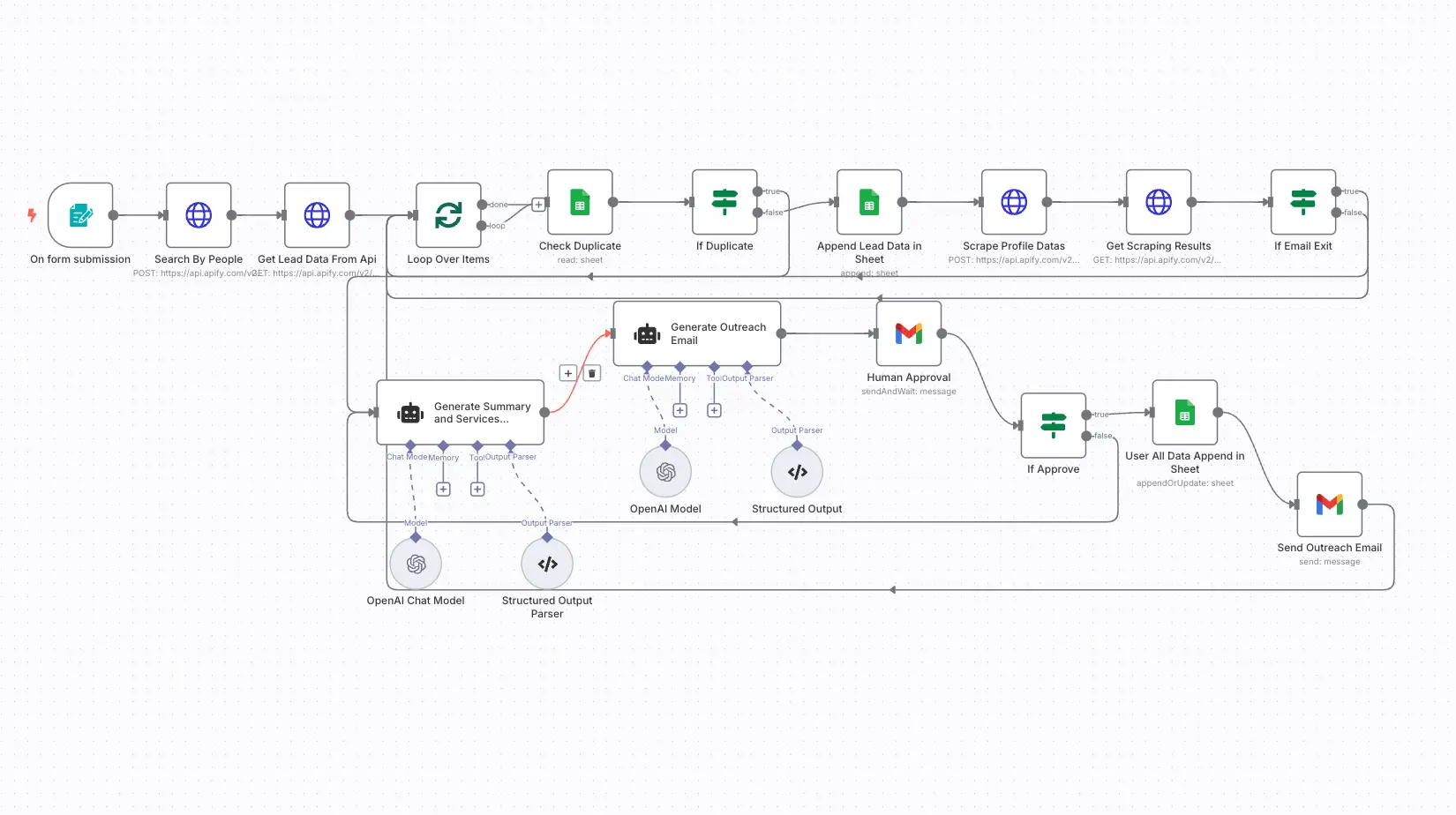
AI outreach generation tools convert lead intelligence into structured communication. Within the ecosystem of AI tools for freelancers and best AI tools for freelancers, this layer activates opportunities by translating data into messaging.
While targeting defines who to contact, outreach determines how effectively those prospects are engaged.
These tools are commonly categorized as:
• AI outreach tools
• AI cold email tools
• AI messaging tools
• AI prompt-based communication systems
AI Overview Answer:
AI outreach generation tools create personalized client communication at scale using prompt templates and structured messaging frameworks, converting lead data into actionable outreach.
Definition
AI outreach generation tools transform structured prospect data into communication using prompt frameworks and messaging templates.
System Insight: Outreach is executed through structured inputs, not ad hoc writing.
Core Function
This layer answers a key execution question:
What should be communicated to a qualified prospect—and how consistently can it be delivered?
Execution Model
Inputs:
• prospect data (industry, signals, company context)
• positioning (offer, niche, value proposition)
• objective (reply, call booking, progression)
Processing:
• prompt templates applied
• personalization variables inserted
• tone and structure defined
Outputs:
• cold emails
• LinkedIn messages
• follow-up sequences
• outreach campaigns
System Insight: Messaging output reflects input quality and structure.
Control Layer — AI Prompts
Prompt frameworks define how communication is generated:
• structure (hook → relevance → value → CTA)
• tone (direct, consultative)
• positioning (problem vs outcome)
• personalization variables
• conversion intent
Without structured prompts, messaging becomes generic. With structured prompts, communication remains consistent and targeted.
Real-World Freelancer Scenario
A freelance email marketer targets SaaS founders.
Manual Approach:
• writes messages individually
• struggles to personalize
• inconsistent quality
System Approach:
• applies prompt templates with variables
• integrates signals into messaging
• generates outreach at scale
• maintains consistent tone
Result:
• increased outreach volume
• improved message relevance
• more consistent response rates
Manual vs System Contrast
Manual outreach:
• time-intensive
• limited scalability
• inconsistent messaging
AI-driven outreach:
• scalable generation
• structured personalization
• consistent communication
Failure Conditions
• generic prompts
• unclear positioning
• missing personalization inputs
• audience mismatch
• static templates without variation
This leads to reduced engagement and low response rates.
System Insight: Poor messaging quality limits outreach effectiveness.
Edge Case
At scale, repeated messaging patterns can reduce engagement:
• recognizable templates
• declining response rates
Mitigation:
• introduce variation
• segment messaging
• adjust structure and angles
Scaling Logic
Stage 1 — basic prompts
Stage 2 — structured templates
Stage 3 — segmented messaging
Stage 4 — adaptive messaging
Cross-Layer Dependency
• depends on targeting quality
• feeds optimization systems
• requires automation for consistency
System Insight: Messaging effectiveness depends on upstream inputs.
Advanced Evolution
At scale, outreach evolves into:
• multi-channel communication (email, LinkedIn)
• segmented messaging systems
• behavior-triggered sequences
System Insight: Messaging adapts based on engagement patterns.
Final Doctrine:
Prompts control outcomes.
AI Communication Optimization Tools
AI communication optimization tools refine acquisition performance by improving messaging effectiveness over time. Within the ecosystem of AI tools for freelancers and best AI tools for freelancers, this layer focuses on identifying what works and systematically improving it.
While targeting defines who to contact and outreach defines what to say, optimization determines how performance is improved through structured feedback.
These tools are commonly associated with:
• AI optimization tools
• AI analytics tools
• AI performance tracking systems
• AI conversion optimization systems
AI Overview Answer:
AI communication optimization tools improve client acquisition by analyzing response data and refining messaging, structure, and targeting inputs through structured feedback loops.
Definition
AI communication optimization tools collect performance data, identify patterns, and refine acquisition variables to improve outcomes.
System Insight: Optimization converts performance data into actionable improvements.
—Core Function
This layer answers a key performance question:
How can messaging and conversion outcomes improve with each execution cycle?
Execution Model
1. Data Collection
• open rates (visibility)
• reply rates (engagement)
• conversion rates (outcomes)
• objection patterns (friction points)
System Insight: Measurement enables refinement.
2. Pattern Analysis
• identify high-performing messages
• detect effective tone and structure
• compare audience segment performance
System Insight: Patterns guide improvement decisions.
3. Message Refinement
• adjust tone and positioning
• improve clarity
• refine call-to-action
• enhance personalization variables
4. Iteration Cycle
• deploy updated messaging
• measure performance changes
• repeat refinement process
System Insight: Iteration improves outcomes incrementally.
Real-World Freelancer Scenario
A freelance consultant runs outreach campaigns targeting B2B companies.
Initial Results:
• high open rates
• low reply rates
Analysis:
• strong subject lines
• weak message body
Adjustment:
• shift to outcome-based messaging
• refine call-to-action
Result:
• increased reply rates
• improved conversion consistency
Manual vs System Contrast
Manual optimization:
• guess-based changes
• inconsistent testing
• no structured tracking
AI-driven optimization:
• data-driven adjustments
• structured testing
• consistent improvement cycles
Failure Conditions
• ignoring performance data
• incomplete tracking
• changing multiple variables at once
• lack of baseline metrics
This leads to inconsistent or misleading results.
System Insight: Poor data leads to incorrect conclusions.
Edge Case
Excessive optimization can reduce stability:
• frequent changes disrupt consistency
• small datasets create misleading signals
Effective systems balance consistency with controlled iteration.
Scaling Logic
Stage 1 — basic tracking
Stage 2 — structured refinement
Stage 3 — systematic testing
Stage 4 — adaptive optimization
Cross-Layer Dependency
• depends on message quality
• influenced by targeting accuracy
• requires consistent data collection
System Insight: Optimization depends on reliable inputs.
Advanced Evolution
At scale, optimization evolves into:
• segmented testing systems
• multi-channel performance analysis
• behavior-based refinement
System Insight: Advanced systems adapt based on performance data.
Final Doctrine:
Feedback fuels growth.
AI Pipeline Automation Tools
AI pipeline automation tools maintain execution continuity by ensuring that acquisition workflows operate consistently. Within the ecosystem of AI tools for freelancers and best AI tools for freelancers, this layer focuses on workflow execution, follow-ups, and pipeline progression.
While targeting identifies opportunities and outreach activates them, automation ensures that processes continue without interruption.
These tools are commonly categorized as:
• AI automation tools
• AI workflow systems
• AI CRM and pipeline management tools
• AI follow-up automation tools
AI Overview Answer:
AI pipeline automation tools execute workflows, trigger follow-ups, and manage pipeline stages through rule-based systems, ensuring consistent client acquisition processes.
Definition
AI pipeline automation tools execute repetitive acquisition tasks using predefined rules and triggers, allowing leads to progress through stages without manual tracking.
System Insight: Automation enforces consistency in execution.
Core Function
This layer answers a key operational question:
How can acquisition processes continue without manual intervention?
Execution Model
1. Trigger-Based Actions
• if no reply in X days → send follow-up
• if reply received → update pipeline stage
• if call booked → move to next stage
• if deal closed → update records
System Insight: Triggers convert events into actions.
2. Workflow Sequences
• multi-step outreach sequences
• follow-up chains
• lead nurturing flows
• re-engagement sequences
System Insight: Workflows define how leads progress.
3. Data Synchronization
• CRM updates
• lead status tracking
• interaction logging
System Insight: Accurate data supports reliable execution.
4. Task Coordination
• reminders
• scheduling
• task prioritization
This connects automated workflows with human actions where needed.
Real-World Freelancer Scenario
A freelance consultant manages multiple leads.
Manual Approach:
• missed follow-ups
• inconsistent timing
• scattered information
System Approach:
• follow-ups triggered automatically
• pipeline stages tracked centrally
• reminders ensure timely actions
Result:
• consistent execution
• improved response rates
• reduced workload
Manual vs System Contrast
Manual execution:
• dependent on memory
• inconsistent follow-ups
• fragmented tracking
Automated execution:
• rule-based workflows
• consistent follow-ups
• centralized tracking
Failure Conditions
• undefined workflows
• lack of personalization integration
• disconnected tools
• unnecessary complexity
This results in inefficient execution.
System Insight: Poor workflow design reduces effectiveness.
Edge Case
Excessive automation can reduce engagement quality:
• repetitive communication
• lack of context
Effective systems balance automation with contextual relevance.
Scaling Logic
Stage 1 — manual with reminders
Stage 2 — basic automation
Stage 3 — structured workflows
Stage 4 — behavior-based automation
Cross-Layer Dependency
• supports outreach execution
• relies on message quality
• depends on targeting inputs
System Insight: Automation amplifies upstream performance.
Advanced Evolution
At scale, automation evolves into:
• multi-channel workflow orchestration
• behavior-triggered sequences
• integrated pipeline systems
System Insight: Advanced automation coordinates processes across channels.
Final Doctrine:
Consistency converts.
Which AI Client Acquisition Tools Should You Use?
The right tools depend on your acquisition stage:
- Beginner: ChatGPT → generate outreach
- Intermediate: Prompt frameworks → structure messaging
- Pipeline stage: Notion AI → manage leads
- Advanced: Automation tools → scale outreach and follow-ups
Start with messaging clarity, then build structured workflows, then scale with automation.
Best AI Client Acquisition Tools for Freelancers
AI client acquisition tools should be evaluated based on their functional role rather than as standalone solutions. Within the ecosystem of AI tools for freelancers and best AI tools for freelancers, each tool contributes to a specific part of the acquisition process.
No single tool performs client acquisition end-to-end. Effective results depend on how tools are structured and used together.
AI Overview Answer:
The best AI client acquisition tools are those that align with specific functions—generation, optimization, coordination, and control—allowing freelancers to build scalable acquisition workflows.
Tool Role Mapping
• ChatGPT → message generation
• Claude → message refinement
• Notion AI → workflow coordination
• Prompt frameworks → messaging control
System Insight: Tool value depends on correct role alignment.
ChatGPT — Generation Layer
Best For:
• outreach generation
• prompt-based messaging
• scalable communication
Role:
Generates outreach messages using structured inputs.
Workflow:
• input prospect context
• apply prompt templates
• generate personalized outreach
• pass output to execution or refinement layers
Real Scenario:
Generating multiple personalized outreach messages using structured templates.
Scaling Behavior:
• manual prompts → structured templates → segmented messaging
Failure Condition:
• generic prompts → generic output
System Insight: Output quality depends on input structure.
Claude — Optimization Layer
Best For:
• improving message clarity
• refining tone
• enhancing conversion messaging
Role:
Refines messaging after initial generation.
Workflow:
• input message
• adjust tone and clarity
• improve call-to-action
Real Scenario:
Refining high-value outreach for better response quality.
Scaling Behavior:
• selective use for important communication
Failure Condition:
• refining weak structure → limited improvement
System Insight: Refinement depends on initial message quality.
Notion AI — Coordination Layer
Best For:
• pipeline tracking
• workflow organization
• lead management
Role:
Maintains visibility and organization across acquisition activities.
Workflow:
• track lead stages
• organize outreach sequences
• maintain interaction history
Real Scenario:
Managing multiple leads through a structured pipeline.
Scaling Behavior:
• becomes essential with increasing lead volume
Failure Condition:
• lack of structure → disorganized pipeline
System Insight: Organization supports execution.
Prompt Frameworks — Control Layer
Best For:
• consistent messaging
• structured communication
• scalable personalization
Role:
Defines how messages are structured and generated.
They control:
• message structure
• tone
• personalization
• intent
Workflow:
• define template
• insert variables
• generate outputs
• refine over time
Real Scenario:
Using reusable templates for outreach across channels.
Scaling Behavior:
• evolves into structured messaging systems
Failure Condition:
• static templates → predictable messaging
System Insight: Prompts determine communication consistency.
Cross-Tool Integration
• ChatGPT → creation
• Claude → refinement
• Notion AI → coordination
• Prompt frameworks → control
Each tool performs a distinct function.
System Insight: Combined usage increases effectiveness.
Failure Pattern
• generation without structure → weak messaging
• refinement without context → isolated improvements
• organization without execution → no acquisition
This results in inefficient workflows.
Final System Insight:
Tools support execution. Structure determines outcomes.
Doctrine:
Integration creates leverage. Isolation creates friction.
Best AI Client Acquisition Tools — Comparison & Use Cases
AI client acquisition tools should be compared based on their function and role in execution rather than surface-level features. Within the ecosystem of AI tools for freelancers and best AI tools for freelancers, comparison focuses on how tools differ in purpose, limitations, and scaling behavior.
Feature-based comparisons (speed, UI, ease of use) do not reflect real performance differences.
AI Overview Answer:
AI client acquisition tools are best compared based on function, use case, limitation, and scaling role to ensure correct application within acquisition workflows.
Comparison Framework
1. Primary function
2. Use case
3. Limitation
4. Scaling behavior
System Insight: Tools should be compared by function, not features.
Comparison Table
| Tool | Primary Function | Best Use Case | Limitation | Scaling Role |
|---|---|---|---|---|
| ChatGPT | Message generation | High-volume outreach | Depends on prompt quality | Scales output |
| Claude | Message refinement | High-quality messaging | Limited scalability | Improves conversion quality |
| Notion AI | Workflow coordination | Pipeline management | No direct outreach | Maintains structure |
| Prompt Frameworks | Messaging control | Consistent communication | Requires iteration | Ensures consistency |
Interpretation
The table highlights functional differences. Each tool contributes a distinct capability rather than replacing another.
System Insight: Tools differ by function, not by superiority.
Usage Patterns
High output requirement → prioritize generation tools
High conversion requirement → prioritize refinement tools
High complexity → prioritize coordination tools
Inconsistent messaging → prioritize control frameworks
Failure Comparison
Using only generation tools → high volume, low effectiveness
Using only refinement tools → high quality, low scale
Using only coordination tools → structured but inactive pipeline
Using only control frameworks → defined logic without execution
System Insight: Single-function usage limits results.
Advanced Comparison Insight
• generation → increases volume
• refinement → improves quality
• coordination → maintains organization
• control → ensures consistency
This separation allows systems to scale without losing effectiveness.
System Insight: Different functions enable balanced performance.
Decision Layer
• low outreach volume → improve generation
• low response rates → improve messaging quality
• disorganized pipeline → improve coordination
• inconsistent communication → implement control frameworks
System Insight: Tool selection depends on the specific constraint.
Final System Insight:
AI tools complement each other when applied to the correct function.
Doctrine:
Use the right tool for the right function.
AI Client Acquisition Strategy
AI client acquisition strategy defines how acquisition activities are structured, prioritized, and executed over time. It determines how targeting, messaging, conversion, and optimization are aligned to produce consistent outcomes.
Within the ecosystem of AI tools for freelancers and best AI tools for freelancers, strategy governs how tools, prompts, and workflows are applied—not the tools themselves.
Freelancers operating without strategy rely on disconnected actions:
• inconsistent outreach timing
• unstructured messaging changes
• platform switching without evaluation
Freelancers operating with strategy apply structured decision logic:
• defined acquisition sequences
• consistent messaging frameworks
• performance-driven adjustments
• controlled execution flow
AI Overview Answer:
AI client acquisition strategy aligns targeting, messaging, conversion, and optimization into a structured framework that enables consistent and scalable client acquisition.
Strategic Foundation
Strategy determines how acquisition decisions are made under different conditions—growth, stagnation, or decline.
System Insight: Strategy governs decisions, not actions.
Core Strategic Structure
Effective acquisition strategy is built around four coordinated components:
1. Targeting → defines opportunity quality
2. Messaging → defines engagement quality
3. Conversion → defines outcome efficiency
4. Optimization → defines performance improvement
System Insight: Weakness in any component limits overall performance.
Stage 1 — Targeting
This stage determines which opportunities are pursued:
• ideal client profile (ICP)
• segmentation criteria
• signal-based qualification
Strategic Role:
Focus effort on high-probability opportunities.
Failure Case:
Broad targeting reduces relevance and efficiency.
Stage 2 — Messaging
This stage defines how communication is structured:
• positioning clarity
• value articulation
• personalization approach
Strategic Role:
Align communication with prospect context.
Failure Case:
Generic messaging reduces engagement regardless of targeting quality.
Stage 3 — Conversion
This stage defines how engagement becomes results:
• call-to-action clarity
• offer alignment
• conversion pathway
Strategic Role:
Translate interest into measurable outcomes.
Failure Case:
Strong engagement without clear conversion pathways leads to lost opportunities.
Stage 4 — Optimization
This stage defines how performance is improved:
• performance tracking
• structured iteration
• feedback-based adjustments
Strategic Role:
Improve efficiency through controlled refinement.
Failure Case:
Lack of feedback integration results in stagnation.
Conditional Strategy Logic
Strategic decisions are based on system conditions:
IF response rates are low → adjust targeting or messaging
IF engagement is high but conversion is low → refine offer or CTA
IF pipeline is inconsistent → improve execution consistency
IF results stagnate → strengthen feedback and iteration
System Insight: Effective strategy depends on correct diagnosis.
Scaling Model
Stage 1 — manual execution with structure
Stage 2 — standardized workflows
Stage 3 — automated processes
Stage 4 — segmented and adaptive systems
System Insight: Scaling is achieved through structured progression.
Failure Scenario
• increasing activity without improving structure
• adjusting messaging without data
• automating ineffective processes
• ignoring performance signals
This leads to inefficient execution.
System Insight: Poor strategy leads to inefficient outcomes.
Advanced Strategy Evolution
At advanced levels, strategy includes:
• segmented execution across audiences
• coordinated use of multiple channels
• adaptive decision-making based on performance data
System Insight: Advanced strategies adapt based on results.
Strategic Integration
• prompts guide communication
• automation supports execution
• tracking informs decisions
This alignment ensures consistent system behavior.
System Insight: Integration enables coordinated execution.
Final System Insight:
Strategy determines how acquisition operates and improves over time.
Doctrine:
Sequence determines success.
Decision Framework
The decision framework functions as the diagnostic and control layer of AI client acquisition. It determines how performance signals are interpreted and where corrective actions should be applied.
Within the ecosystem of AI tools for freelancers and best AI tools for freelancers, this framework ensures that adjustments are applied to the correct component instead of being made randomly.
Most acquisition inefficiencies originate from incorrect diagnosis rather than lack of effort or tools.
AI Overview Answer:
The AI client acquisition decision framework maps performance symptoms to specific problem areas, enabling precise and effective corrections.
Core Function
This framework answers a critical operational question:
What should be fixed—and where should the adjustment be applied?
It prevents:
• random experimentation
• incorrect problem targeting
• unnecessary changes
• unstable execution
System Insight: Accurate diagnosis determines improvement efficiency.
Diagnostic Mapping
Each performance issue corresponds to a specific problem area:
• low visibility → targeting issue
• low engagement → messaging issue
• low conversion → offer or pathway issue
• inconsistent execution → workflow issue
• stagnant performance → optimization issue
This mapping converts symptoms into actionable decisions.
System Insight: Symptoms indicate where intervention is required.
Decision Process
Step 1 — Identify the Symptom
• low open rates
• low reply rates
• replies without calls
• calls without conversions
• inconsistent pipeline
Step 2 — Assign the Cause
Case 1 — Low Open Rates
Cause:
• incorrect audience
• weak entry point
Action:
Adjust targeting → refine initial message entry.
System Insight: Visibility issues typically originate from targeting.
Case 2 — Low Reply Rates
Cause:
• generic messaging
• unclear value
Action:
Improve messaging clarity and personalization.
System Insight: Engagement issues reflect communication quality.
Case 3 — Replies but No Calls
Cause:
• unclear next steps
• weak call-to-action
Action:
Simplify and clarify conversion pathway.
System Insight: Engagement without progression indicates friction.
Case 4 — Calls but No Conversions
Cause:
• misaligned offer
• unclear value positioning
Action:
Adjust offer and value alignment.
System Insight: Conversion issues often relate to offer structure.
Case 5 — Inconsistent Pipeline
Cause:
• irregular execution
• missing follow-ups
Action:
Introduce structured workflows and consistency mechanisms.
System Insight: Inconsistency reflects execution gaps.
Misdiagnosis Example
Incorrect Action:
Rewriting messaging repeatedly when reply rates are low.
Actual Issue:
• incorrect audience selection
Correct Action:
Refine targeting before modifying messaging.
System Insight: Misdiagnosis leads to ineffective changes.
Real-World Scenario
A freelancer observes low response rates from outreach campaigns.
Initial assumption:
• messaging needs improvement
Diagnosis:
• broad audience
• weak targeting signals
Action:
• refine audience selection
• maintain messaging structure
Result:
• improved response rates without rewriting communication
System Insight: Correct diagnosis reduces unnecessary effort.
Decision Sequence Logic
• do not adjust messaging before validating targeting
• do not scale outreach before validating conversion
• do not automate inconsistent processes
• avoid changing multiple variables simultaneously
System Insight: Sequence ensures clarity in results.
Advanced Decision Logic
• different audiences require different messaging approaches
• different channels require different execution styles
• different offers require different conversion strategies
This introduces context-based decision-making.
System Insight: Decisions adapt based on context.
Failure Conditions
• multiple changes at once
• lack of measurement
• reactive decisions
• ignoring data signals
This results in inconsistent outcomes.
System Insight: Poor decisions reduce system effectiveness.
Role of AI in Decisions
• supports pattern detection
• tracks performance data
• assists in testing variations
However, decision logic remains human-controlled.
System Insight: AI supports decisions but does not replace them.
Final System Insight:
The decision framework ensures that every adjustment improves performance rather than introducing instability.
Doctrine:
Structure enables correct decisions.
End-to-End Workflow
This is where most freelancers fail. They perform random outreach instead of building a structured acquisition system. Below is the complete system workflow used to generate consistent clients.
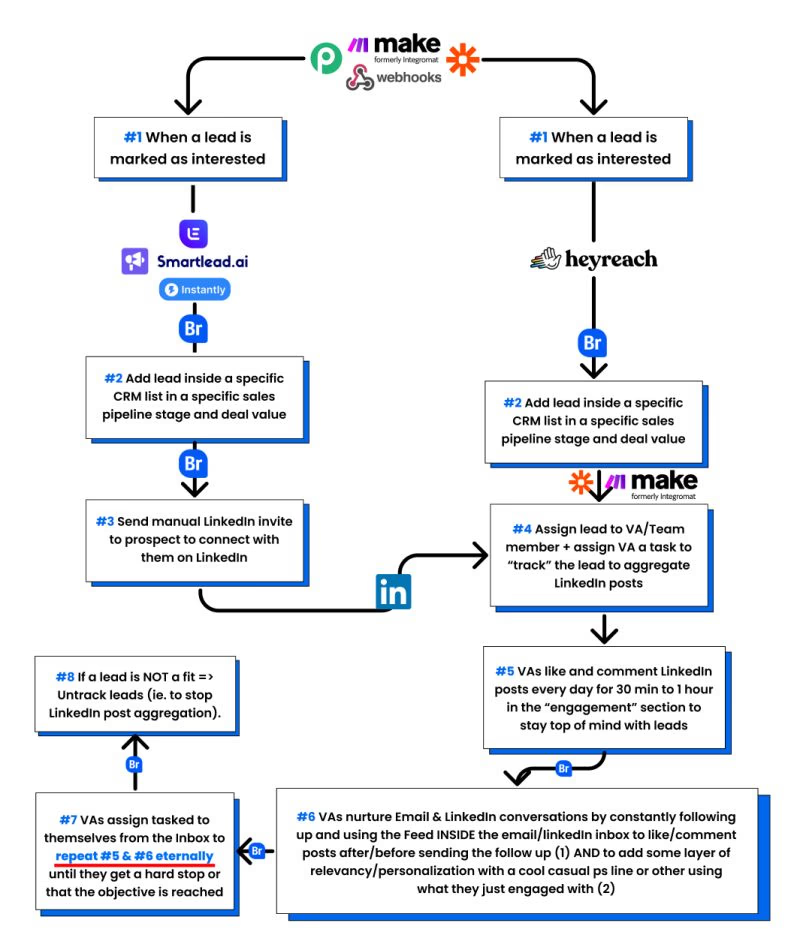
The end-to-end workflow defines how client acquisition activities are executed consistently. It translates structured inputs into repeatable actions, ensuring that acquisition processes are carried out without gaps.
Within the ecosystem of AI tools for freelancers and best AI tools for freelancers, this workflow connects lead identification, outreach execution, follow-ups, tracking, and performance analysis into a coordinated sequence.
AI Overview Answer:
An AI client acquisition workflow is a structured execution sequence that identifies leads, generates outreach, manages follow-ups, tracks interactions, and refines performance through repeated cycles.
Core Workflow Sequence
The workflow operates as a repeatable execution cycle:
1. Define target client profile (ICP)
2. Identify leads using intelligence tools
3. Generate outreach using structured prompts
4. Send messages across selected channels
5. Trigger follow-ups based on predefined rules
6. Track responses and pipeline status
7. Analyze performance data
8. Apply refinements to inputs and execution
System Insight: Repetition enables consistent execution.
Execution Structure
The workflow connects distinct activities into a coordinated process:
• lead sourcing → identifies opportunities
• outreach execution → initiates engagement
• follow-up handling → maintains interaction
• tracking → records outcomes
• analysis → informs adjustments
System Insight: Structured sequencing reduces execution gaps.
Time-Based Execution Model
Daily Execution
• identify new leads
• generate and send outreach
• respond to conversations
• monitor pipeline activity
Weekly Execution
• review response and conversion metrics
• adjust targeting and messaging inputs
• refine follow-up timing
Monthly Execution
• evaluate overall performance
• identify bottlenecks
• update workflow structure if required
System Insight: Execution frequency supports consistency.
Tool Alignment
Each workflow step aligns with a tool function:
• lead identification → intelligence tools
• outreach generation → messaging tools
• refinement → optimization tools
• tracking → coordination tools
• follow-ups → automation tools
System Insight: Tools execute steps within the workflow.
Branching Logic
The workflow adapts based on observed outcomes:
IF open rates are low → adjust targeting inputs or entry points
IF reply rates are low → refine messaging structure
IF engagement does not progress → improve call-to-action
IF pipeline flow is inconsistent → strengthen execution consistency
System Insight: Workflow adjustments respond to performance signals.
Volume Scaling
Low Volume
• manual execution supported by tools
• limited automation
• focus on consistency
Medium Volume
• structured templates
• partial automation
• consistent tracking
High Volume
• automated sequences
• segmented messaging
• multi-channel execution
System Insight: Scaling requires stable execution structure.
Real-World Scenario
A freelancer transitions from irregular outreach to structured execution:
Initial State:
• inconsistent lead sourcing
• irregular outreach
• no tracking
Structured Workflow:
• defined lead identification process
• prompt-based outreach generation
• consistent follow-ups
• tracked pipeline activity
Outcome:
• consistent outreach execution
• improved response stability
• clearer performance visibility
Break Conditions
• inconsistent execution frequency
• missing follow-up steps
• incomplete tracking
• unstructured workflow sequence
This results in reduced effectiveness.
System Insight: Gaps in execution reduce performance.
Dependency Structure
• lead quality affects engagement
• messaging affects response rates
• follow-ups affect conversion
• tracking affects improvement
System Insight: Each step influences subsequent outcomes.
Advanced Workflow Evolution
At advanced levels, workflows include:
• multi-channel execution
• segmented workflows per audience
• behavior-based follow-ups
• integrated tracking systems
System Insight: Advanced workflows increase coordination.
Final System Insight:
Workflows define how acquisition activities are executed consistently.
Doctrine:
Execution requires structure.
Use Cases
AI client acquisition workflows apply across all freelancer levels. The structure remains consistent, while execution depth, automation, and complexity increase over time.
Within the ecosystem of AI tools for freelancers and best AI tools for freelancers, these use cases illustrate how execution evolves as systems mature.
AI Overview Answer:
AI client acquisition workflows evolve from basic outreach execution to fully structured, multi-channel systems as freelancers increase implementation depth and operational maturity.
Use Case 1 — Beginner Freelancer
Context:
• no consistent client pipeline
• reliance on job platforms or referrals
• unpredictable income cycles
Pre-Implementation State:
• random job applications
• generic outreach
• no follow-up structure
• inconsistent execution
Implementation:
• define basic target profile
• identify initial prospects using tools
• generate outreach using prompt templates
• apply simple follow-up logic
• track responses manually
Post-Implementation Outcome:
• consistent outreach activity
• improved response visibility
• early pipeline formation
• initial performance data collection
Key Insight: Consistency establishes baseline performance.
Failure Risk:
• irregular execution
• weak targeting inputs
• generic messaging output
Use Case 2 — Intermediate Freelancer
Context:
• some existing clients
• inconsistent pipeline flow
• variable monthly income
Pre-Stabilization State:
• irregular outreach scheduling
• partial targeting clarity
• limited follow-up structure
• minimal tracking
Implementation:
• refine targeting using signals
• standardize messaging templates
• introduce follow-up workflows
• centralize pipeline tracking
• track key performance metrics
Post-Implementation Outcome:
• more stable pipeline flow
• consistent execution rhythm
• improved engagement rates
• clearer performance visibility
Key Insight: Structure stabilizes performance.
Failure Risk:
• excessive automation without control
• inconsistent data tracking
• lack of feedback usage
Use Case 3 — Advanced Freelancer
Context:
• consistent client demand
• revenue stability
• growth limited by manual processes
Pre-Scaling Constraints:
• manual bottlenecks
• limited segmentation
• partial automation
Implementation:
• segment targeting across audiences
• implement multi-channel outreach
• automate follow-ups and transitions
• introduce structured testing
• integrate performance tracking
Post-Implementation Outcome:
• scalable pipeline volume
• maintained lead quality
• improved conversion efficiency
• reduced manual workload
Key Insight: Scale requires structured execution.
Failure Risk:
• scaling without segmentation
• uniform messaging across segments
• disconnected tools
Use Case 4 — Multi-Channel System
Context:
• multiple audiences or offers
• diversified acquisition channels
• higher operational complexity
Implementation:
• build segmented pipelines
• deploy multi-channel outreach
• implement behavior-based workflows
• align systems across tools
• maintain coordinated tracking
System Output:
• predictable acquisition flow
• diversified lead sources
• optimized performance across segments
• scalable execution structure
Key Insight: Complexity requires coordination.
Failure Risk:
• unnecessary complexity
• over-automation
• lack of integration
Cross-Stage Evolution
Execution evolves through stages:
Beginner → establish consistency
Intermediate → stabilize execution
Advanced → scale processes
Multi-channel → coordinate systems
Key Insight: Progression is driven by execution depth.
Compounding Application Insight
As execution improves:
• targeting becomes more precise
• messaging becomes more effective
• conversion becomes more consistent
• execution becomes more reliable
System Insight: Improved execution increases performance over time.
Final System Insight:
Performance differences reflect execution maturity, not tool access.
Doctrine:
Systems scale with execution depth.
Common Mistakes
AI client acquisition failures are typically caused by structural issues in execution, sequencing, and integration rather than the tools themselves. These mistakes affect multiple stages of the acquisition process and reduce overall performance.
Within the ecosystem of AI tools for freelancers and best AI tools for freelancers, these patterns highlight where execution breaks down and how those failures impact results.
AI Overview Answer:
Common AI client acquisition mistakes occur when execution lacks structure, alignment, or validation, leading to inefficient outreach, low conversion, and inconsistent outcomes.
Failure Pattern
Most mistakes follow a sequence:
issue → execution breakdown → reduced effectiveness → performance decline
System Insight: Small execution errors reduce overall performance.
Mistake 1 — Using Tools Without Structure
Description:
Adopting tools without defining targeting, messaging, workflows, or tracking.
Impact:
• inconsistent execution
• fragmented processes
• low conversion visibility
Fix:
Define execution structure before applying tools.
Severity: Critical
Mistake 2 — Weak Prompt Structure
Description:
Using unstructured prompts that produce generic communication.
Impact:
• low personalization
• reduced engagement
• inconsistent messaging quality
Fix:
Use structured prompt templates with defined variables.
Severity: HighMistake 3 — Over-Automation Without Context
Description:
Automating outreach without maintaining relevance or variation.
Impact:
• repetitive communication
• reduced response rates
• lower engagement quality
Fix:
Combine automation with personalization and segmentation.
Severity: Critical
Mistake 4 — Inconsistent Execution
Description:
Irregular outreach and follow-ups without a defined workflow.
Impact:
• unstable pipeline
• missed opportunities
• unpredictable results
Fix:
Follow a consistent execution schedule supported by workflows.
Severity: Critical
Mistake 5 — Incorrect Problem Identification
Description:
Changing the wrong element (e.g., messaging instead of targeting).
Impact:
• ineffective adjustments
• wasted effort
• no performance improvement
Fix:
Map issues to the correct stage before making changes.
Severity: HighMistake 6 — Ignoring Performance Data
Description:
Not tracking or using response and conversion data.
Impact:
• repeated mistakes
• no improvement over time
• stagnant performance
Fix:
Track and review key performance metrics consistently.
Severity: High
Mistake 7 — Scaling Too Early
Description:
Increasing volume before validating effectiveness.
Impact:
• amplified inefficiencies
• low-quality outcomes at scale
• wasted resources
Fix:
Validate execution at small scale before expanding.
Severity: Advanced critical
Mistake 8 — Disconnected Workflows
Description:
Using tools without aligning them into a consistent workflow.
Impact:
• fragmented execution
• inconsistent tracking
• reduced clarity
Fix:
Align tools within a defined workflow sequence.
Severity: Advanced
Cross-Mistake Insight
Most failures occur when execution lacks:
• structure
• consistency
• tracking
• alignment between steps
System Insight: Execution quality determines results.
Failure Escalation
When issues are not corrected:
• inefficiencies increase
• conversion rates decline
• execution becomes less effective
When corrected early:
• performance stabilizes
• results improve
• execution becomes more reliable
System Insight: Early correction prevents larger issues.
Final System Insight:
Small execution gaps can reduce overall performance if left unaddressed.
Doctrine:
Incomplete execution leads to incomplete results.
Frequently Asked Questions
This section answers high-intent queries related to AI client acquisition tools while reinforcing system-level understanding. Within the ecosystem of AI tools for freelancers and best AI tools for freelancers, these answers are structured for Google Search, Google Discover, and AI Overview extraction.
Each answer is designed to function as both a standalone response and part of a larger system explanation, increasing visibility across search and AI-driven interfaces.
AI Overview Answer:
AI client acquisition tools enable freelancers to build structured systems that continuously identify, engage, and convert clients using AI lead generation, outreach automation, prompt engineering, and feedback-driven optimization.
What are AI client acquisition tools?
Answer: AI client acquisition tools are systems that automate and optimize how freelancers identify, contact, and convert clients. They combine AI lead generation, outreach automation, prompt engineering, and workflow management to create a continuous acquisition pipeline rather than a one-time effort.
System Insight: These tools function as system components—not standalone solutions.
How do freelancers get clients using AI?
Answer: Freelancers get clients using AI by building a structured acquisition system. This system includes defining a target audience, identifying leads using AI tools, generating personalized outreach with AI prompt templates, automating follow-ups, and optimizing performance using feedback data.
System Insight: Results come from system execution—not individual tools.
What are the best AI tools for client acquisition?
Answer: The best AI tools for freelancers depend on system role. ChatGPT is used for outreach generation, Claude for message optimization, Notion AI for workflow coordination, and prompt frameworks for controlling messaging logic. Effectiveness depends on how these tools are integrated into a structured system.
System Insight: Tools are effective only when aligned with system layers.
Can AI replace cold outreach?
Answer: AI does not replace cold outreach—it enhances and scales it. Outreach remains essential, but AI improves targeting accuracy, message personalization, and follow-up consistency, transforming outreach into a predictable system.
System Insight: AI improves execution—it does not eliminate core acquisition functions.
How important is prompt engineering for freelancers?
Answer: Prompt engineering is critical because it controls how AI generates outreach messages. Well-structured AI prompts for freelancers ensure consistent tone, personalization, and positioning, while poor prompts produce generic messaging and low response rates.
System Insight: Prompt frameworks define system behavior at scale.
What is the difference between AI lead generation and client acquisition?
Answer: AI lead generation focuses on identifying potential clients, while AI client acquisition includes the full system—lead identification, outreach, conversion, and optimization. Lead generation is only one layer of the acquisition system.
System Insight: Acquisition is a system. Lead generation is a component.
How long does it take to see results from AI client acquisition?
Answer: Freelancers often see early improvements in engagement within 1–2 weeks of implementing structured systems. However, consistent and predictable client acquisition typically develops over 4–8 weeks as feedback loops refine targeting, messaging, and workflows.
System Insight: Systems improve through iteration, not instant results.
What are the biggest mistakes in AI client acquisition?
Answer: The most common mistakes include using tools without a system, poor prompt engineering, over-automation without personalization, inconsistent execution, and ignoring feedback data. These issues reduce effectiveness because they break system structure.
System Insight: Most failures are structural—not tactical.
Can AI client acquisition work for any freelancer?
Answer: Yes, AI client acquisition systems can be applied across industries and niches. However, they must be adapted to the freelancer’s target audience, service offering, and positioning. The system structure remains consistent, but execution varies.
System Insight: Systems are universal—implementation is contextual.
Do freelancers still need manual outreach?
Answer: Yes. AI enhances and scales outreach, but freelancers still define targeting, refine messaging, and manage client conversations. Over time, more processes can be automated, but strategic control remains human-driven.
System Insight: AI supports execution—humans control strategy.
How do AI tools improve client conversion rates?
Answer: AI tools improve conversion rates by enabling better targeting, personalized messaging, consistent follow-ups, and data-driven optimization. These improvements increase engagement quality and reduce friction in the conversion process.
System Insight: Conversion improves when systems align targeting, messaging, and offers.
What is the fastest way to improve AI client acquisition results?
Answer: The fastest improvement comes from identifying the weakest system layer—targeting, messaging, conversion, or execution—and fixing it using structured decision frameworks. Random changes are less effective than targeted system corrections.
System Insight: Correct diagnosis accelerates results.
SEO Insight: This FAQ section captures high-intent queries, supports featured snippets, and enhances AI Overview extraction by providing structured, direct answers aligned with search intent.
System Insight: FAQ sections reinforce authority by converting complex systems into clear, actionable explanations.
Doctrine: Clarity converts complexity into action.
Conclusion
AI client acquisition tools are not individual solutions—they are system components that transform how freelancers generate opportunities, engage prospects, and build predictable income streams.
Within the ecosystem of AI tools for freelancers and best AI tools for freelancers, the competitive advantage is not access to tools, but the ability to structure those tools into a unified acquisition system.
This system operates through four interdependent layers:
• lead intelligence → defines who to target
• outreach generation → defines what to communicate
• optimization → defines how the system improves
• automation → defines how the system scales and sustains execution
These layers are governed by AI prompts for freelancers and structured prompt engineering frameworks, which act as the control system defining how messaging, workflows, and decisions operate across all stages.
When integrated correctly, this system produces:
• continuous opportunity generation
• scalable and personalized communication
• predictable conversion into clients
• feedback-driven performance improvement
• consistent execution independent of manual effort
This shifts client acquisition from a reactive activity into a continuously operating system.
System Transformation (Before vs After)
Manual Acquisition Model:
• inconsistent outreach execution
• dependence on motivation and time
• unpredictable income cycles
• repeated effort without learning
• no compounding improvement
System-Driven Acquisition Model:
• continuous acquisition pipeline
• structured and repeatable workflows
• predictable client flow
• feedback-driven optimization
• compounding performance over time
System Insight: Stability is created by structure, not effort.
Compounding Advantage (Core Mechanism)
The primary advantage of AI client acquisition systems is not speed—it is compounding.
• each targeting refinement improves lead quality
• each messaging iteration improves engagement rates
• each conversion insight improves positioning
• each workflow cycle increases execution efficiency
Over time, these improvements accumulate, transforming linear effort into exponential growth.
System Insight: Compounding is the result of structured feedback loops.
System Control Layer (Critical Insight)
AI tools do not operate independently. Their effectiveness is controlled by:
• prompt frameworks (messaging logic)
• workflow systems (execution structure)
• decision frameworks (diagnostic control)
• optimization loops (continuous improvement)
Without this control layer, tools produce inconsistent results.
System Insight: Control systems determine output quality.
Strategic Reality
Freelancers who struggle with client acquisition are not lacking effort—they are operating without structured systems.
AI tools amplify whatever system exists:
• weak systems → amplified inefficiency
• fragmented systems → amplified confusion
• strong systems → amplified results
• integrated systems → predictable growth
This makes system design the highest-leverage activity in freelancer growth.
System Insight: Tools scale systems—not outcomes.
Final Integration Insight
The complete acquisition system connects across the broader FM Mastery architecture:
• AI tools hub → foundational ecosystem
• best AI tools for freelancers → tool selection layer
• AI productivity tools → execution support
• AI automation tools → workflow continuity
• AI finance tools → income tracking and stability
• AI prompts for freelancers → control layer
This creates a unified operating system where acquisition, execution, and financial outcomes are interconnected.
System Insight: Integration creates compounding leverage across all system layers.
Final Perspective
The transition from manual acquisition to AI-driven systems is not incremental—it is structural.
Freelancers who adopt systems:
• reduce dependency on inconsistent effort
• build predictable pipelines
• scale without increasing workload linearly
• create long-term compounding advantages
Freelancers who do not remain dependent on cycles of effort, uncertainty, and reactive execution.
Final System Insight:
Client acquisition becomes predictable only when it is designed as a system, executed through workflows, controlled by prompts, and improved through feedback.
Final Doctrine:
Freelancers who rely on effort stay reactive.
Freelancers who build systems gain control.